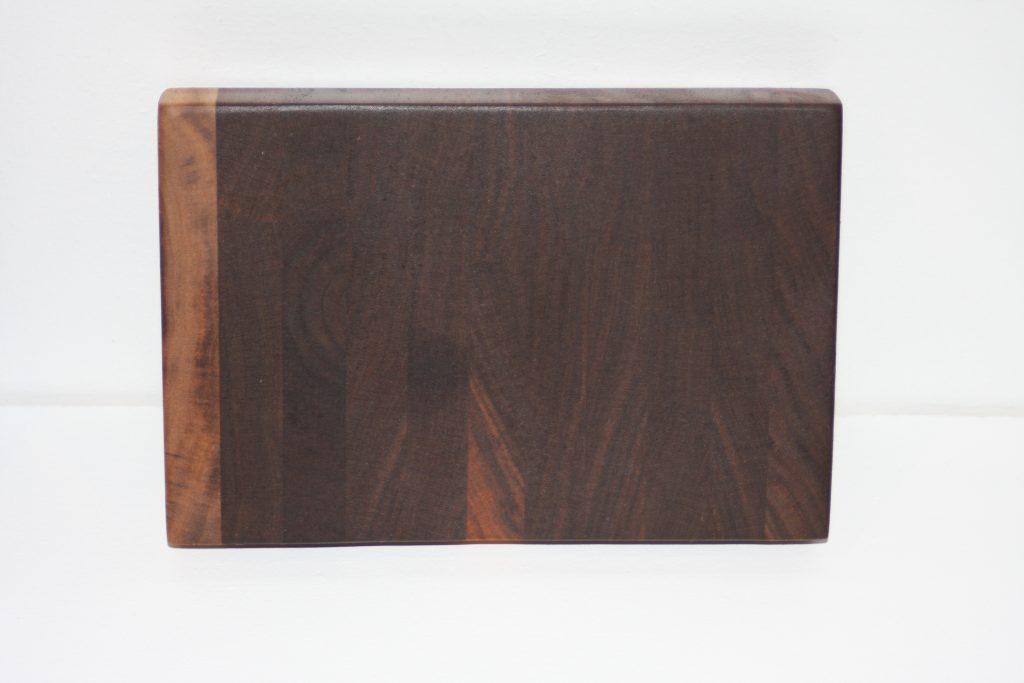
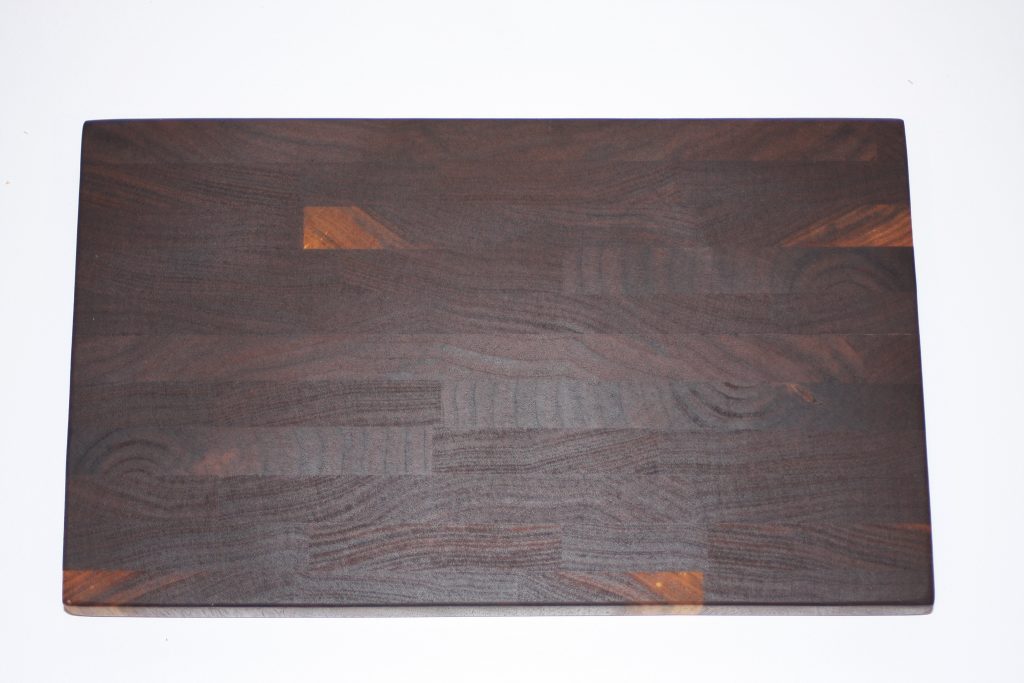
As I complete projects I seem to have a lot of scrap pieces that I just can’t get myself to throw away (or burn) so they seem to accumulate until I have no where to keep them. I’ve chosen on several occasions to use these scraps to make cutting boards.
Most of these cutting boards are “end” grain cutting boards (as opposed to an “edge” grain cutting board). End grain cutting boards have several advantages over edge grain cutting boards. An end grain board is very fibrous, so it’s easier on your knives (your knives will stay sharper longer). They are less susceptible to nicks and cuts, making them more durable and longer lasting. They are easy to maintain (apply mineral oil once in a while) and in my opinion, they have a lot more character.
The downside to end grain cutting boards is they take a lot longer to make which makes them more expensive. Is it worth the cost? You tell me.
Here are some of the boards I’ve made:
Please use our Contact form to arrange the purchase of any of these items.
Cutting Boards
All the cutting boards are roughly 12″ x 18″ x 1.5″.
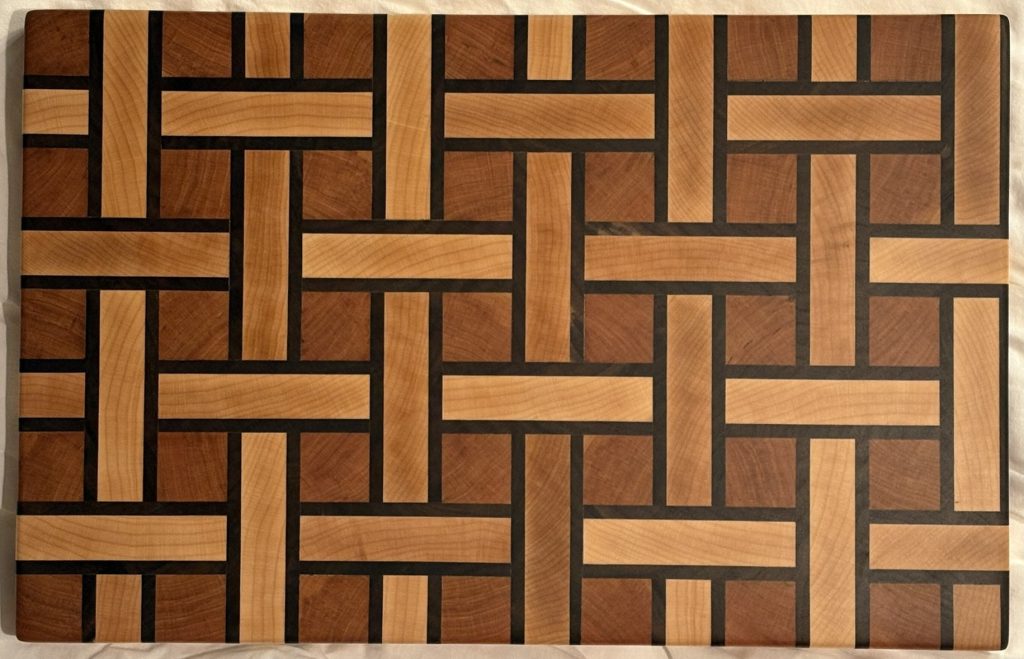
Weave 1.0-2
I’ve made 2 versions of a “Weave” pattern, Weave 1.0 and Weave 2.0. I liked Weave 1.0 better so I made another batch. I have several of these, all have maple and walnut but some have hickory square blocks and some have cherry square blocks.
Mixed Up
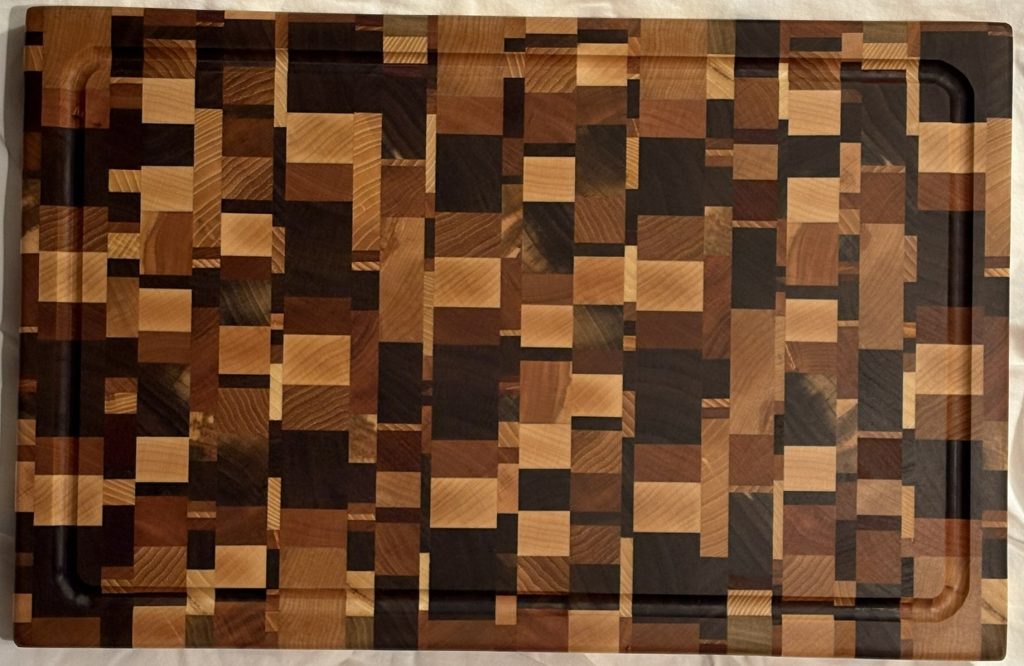
What do I do when I have a lot of scraps of different species, different sizes etc.? Make a cutting board of course.
Walnut Blocks
I purchased a pallet of walnut and amongst it was a whole bunch of long, square pieces that I used to put together in various patterns. Here is just one of those patterns, I have several others available.
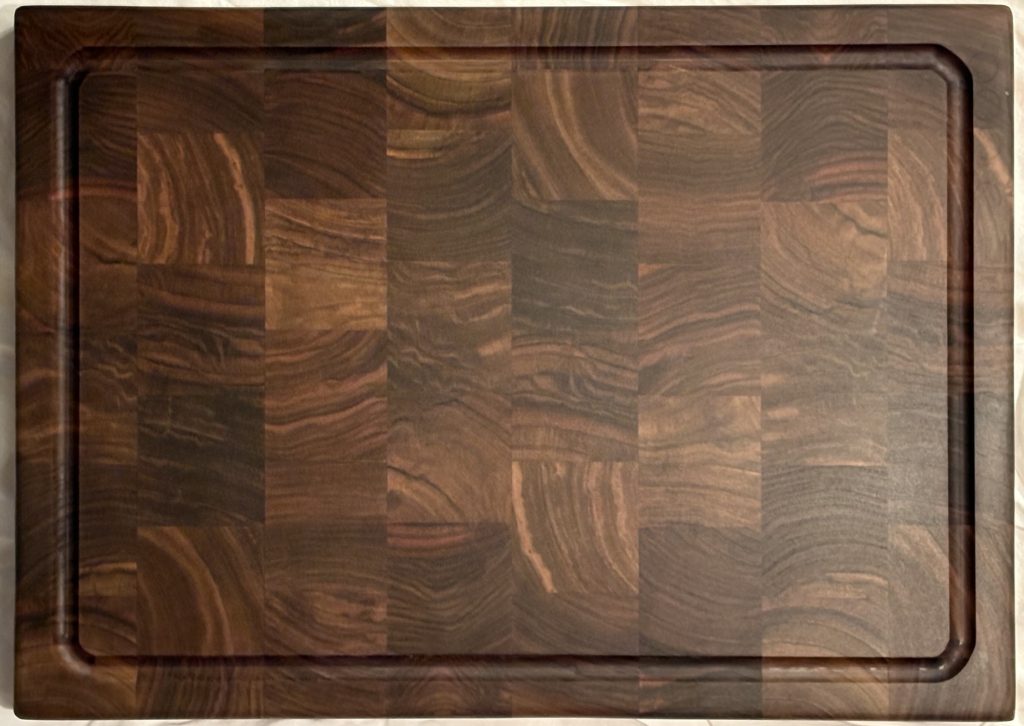
Clea 2
I’ve made this pattern before but this time I used hickory.
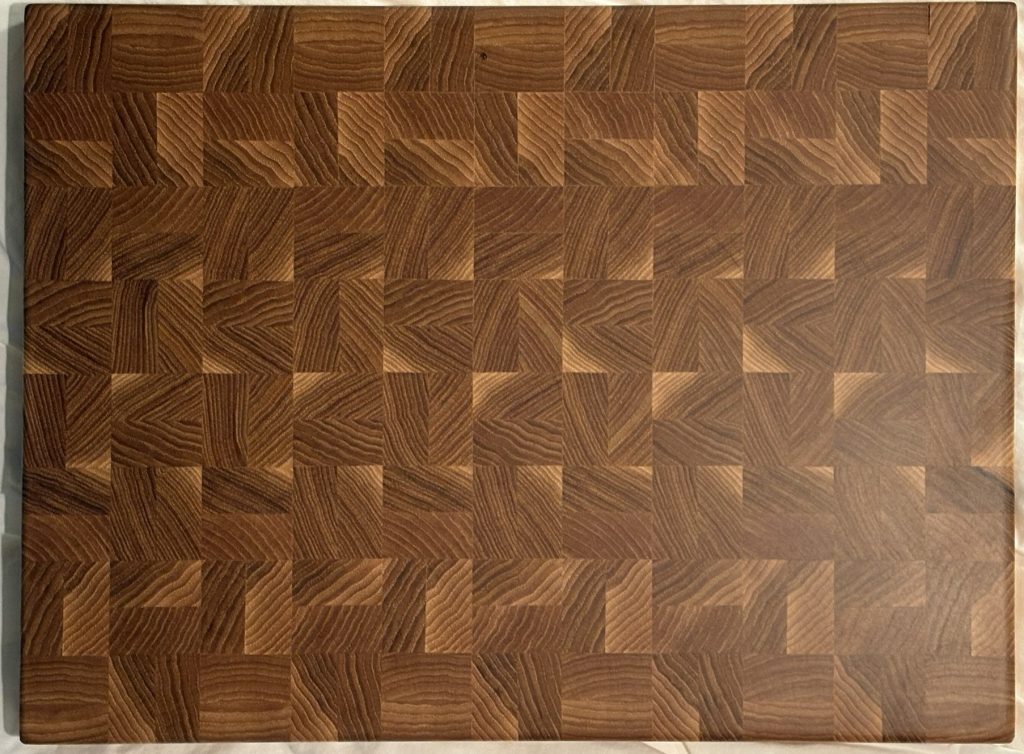
Book matched English Walnut with 2 thin strips of maple:
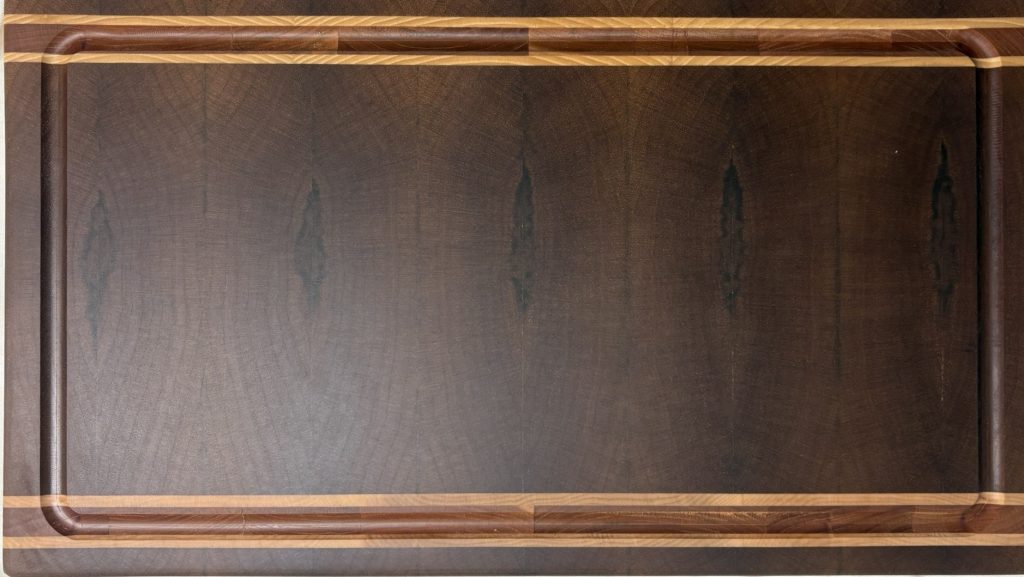
Large chunk walnut book matched
I had some very large chunks of walnut sitting around for about 20 years. I always intended to turn some bowls out of them but it I haven’t done so by this time it’s not likely I will now, so I made some cutting boards out of them. This one is just 2 pieces of that walnut in a book matched pattern.
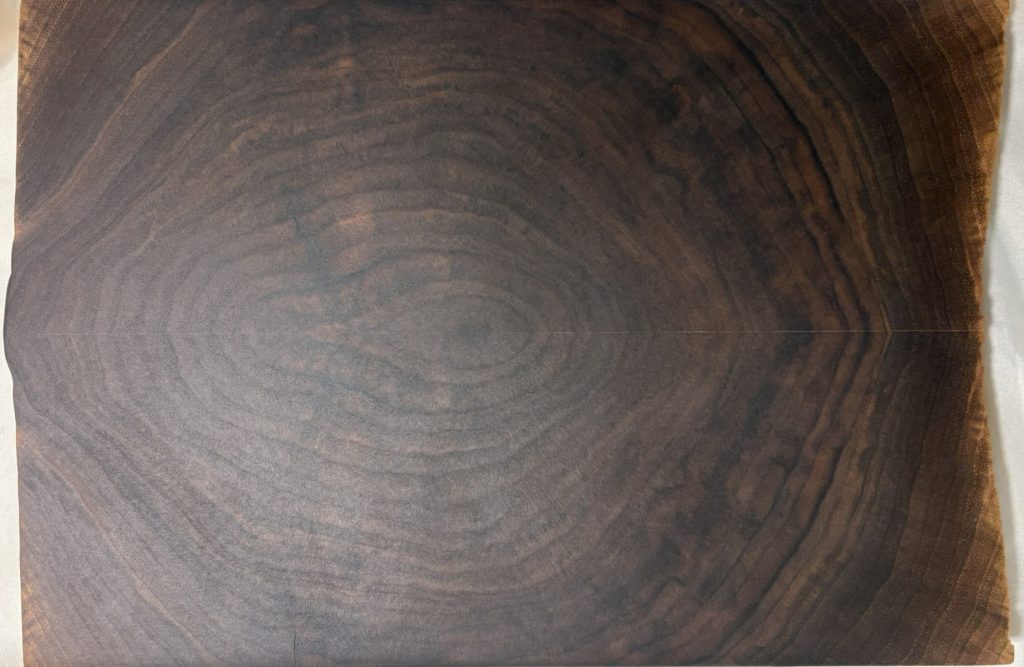
Book matched English Walnut (smaller than most)
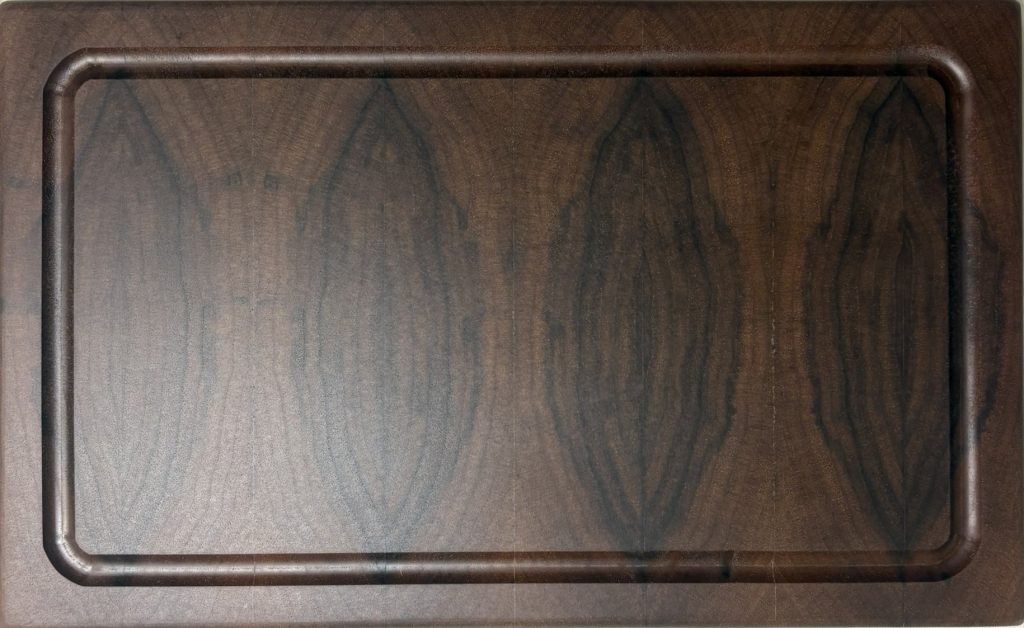
Book matched English Walnut with a strip of Maple:
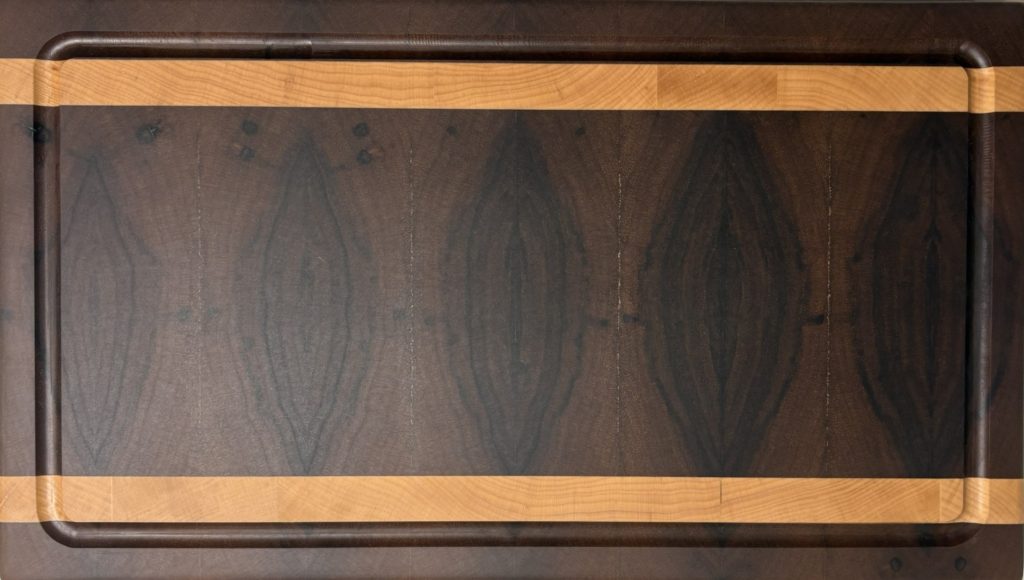
Book matched English Walnut with a thin strip of Purpleheart and then a strip of Maple around the outside
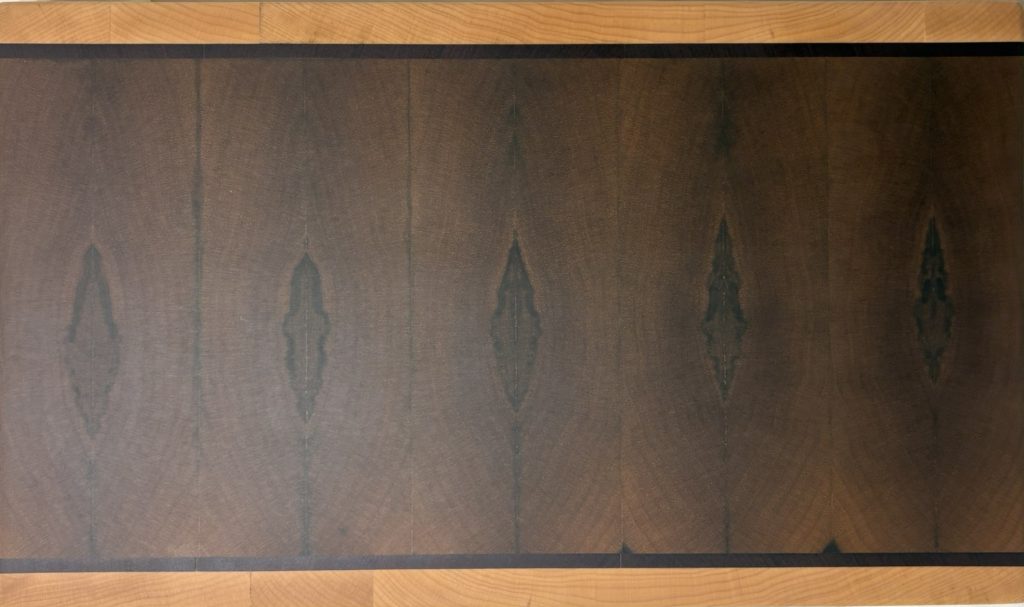
Book matched walnut with cherry boarder
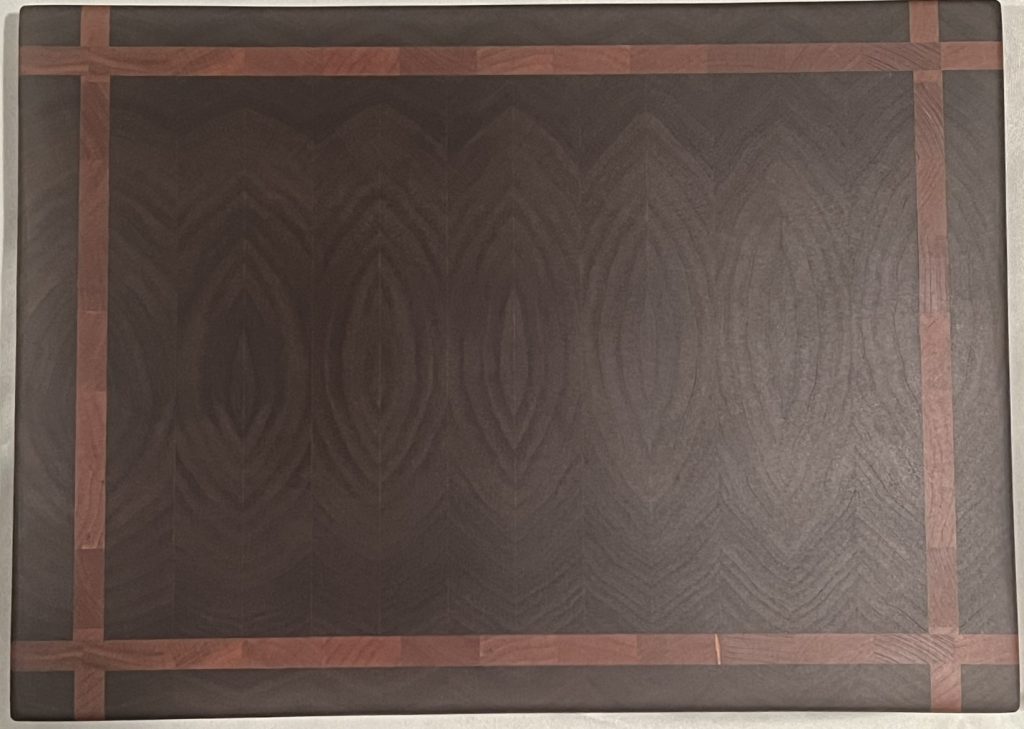
Light walnut pieces
After I made some boards out of walnut where I wanted the walnut to be as dark as possible, I had some other pieces that has some lighter wood. I took all those pieces and built these boards.
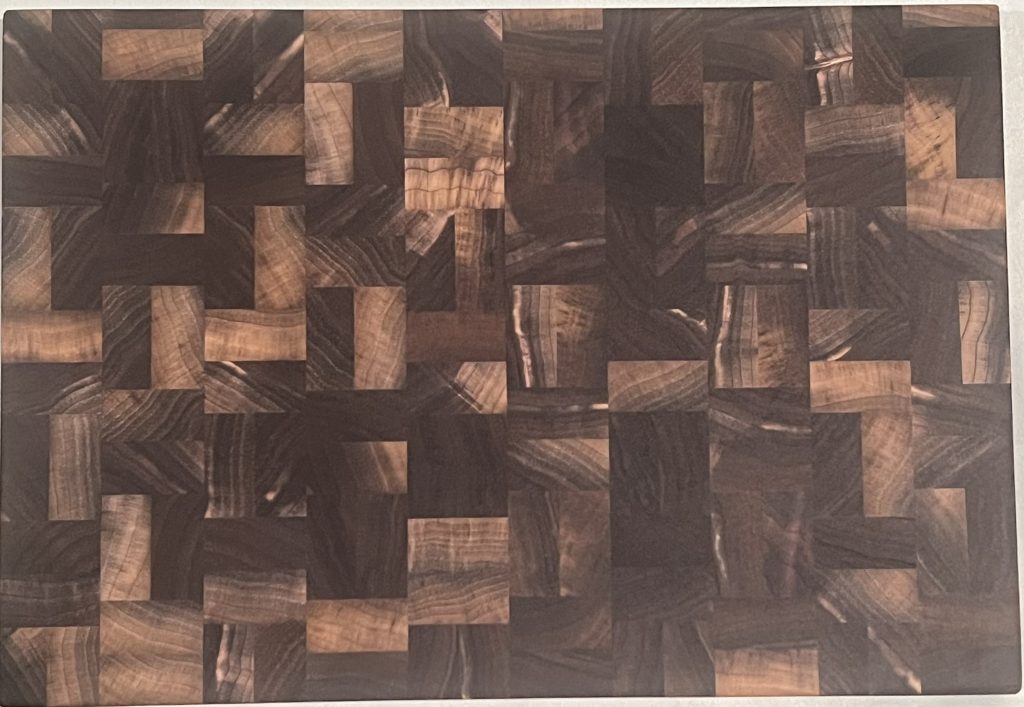
Book matched walnut with cherry boarder
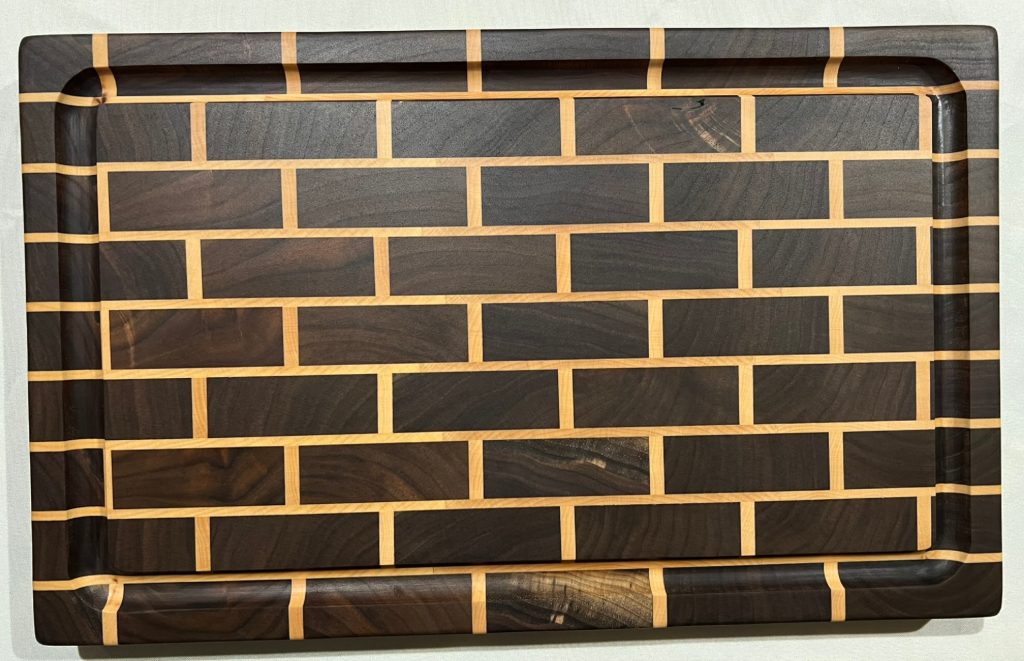
Bricks in walnut
Bricks in walnut with maple as the mortar.
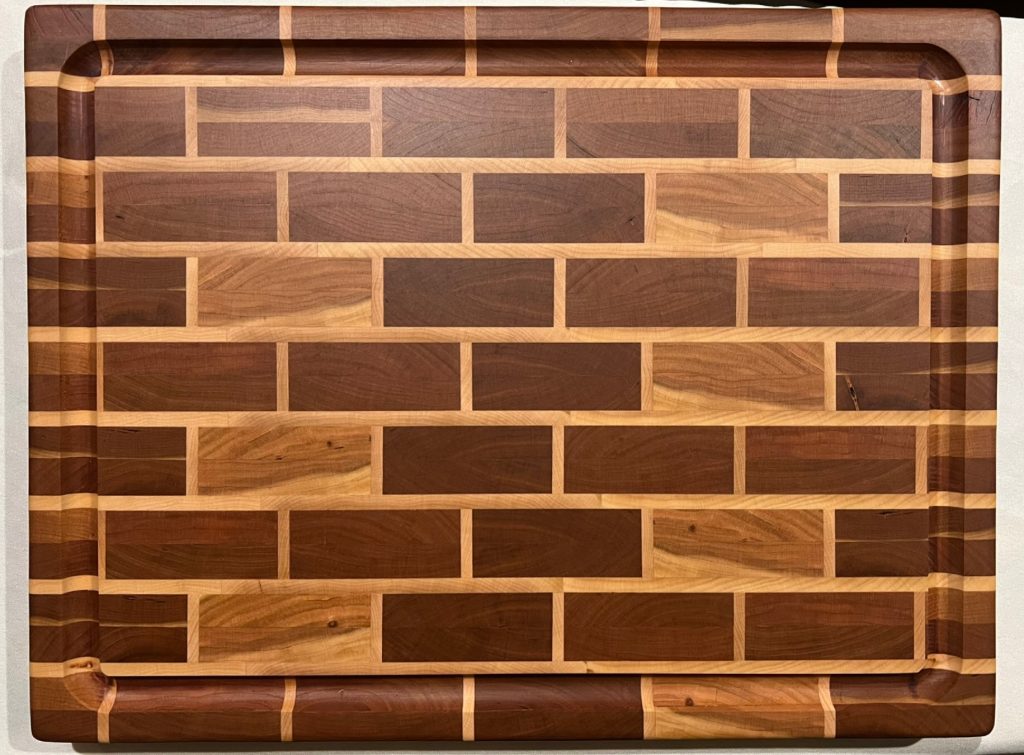
Bricks in cherry
Bricks in cherry with maple as the mortar.
Clea2
Similar to the Pig Standard but without the thin slice in the middle. This is made with Maple.
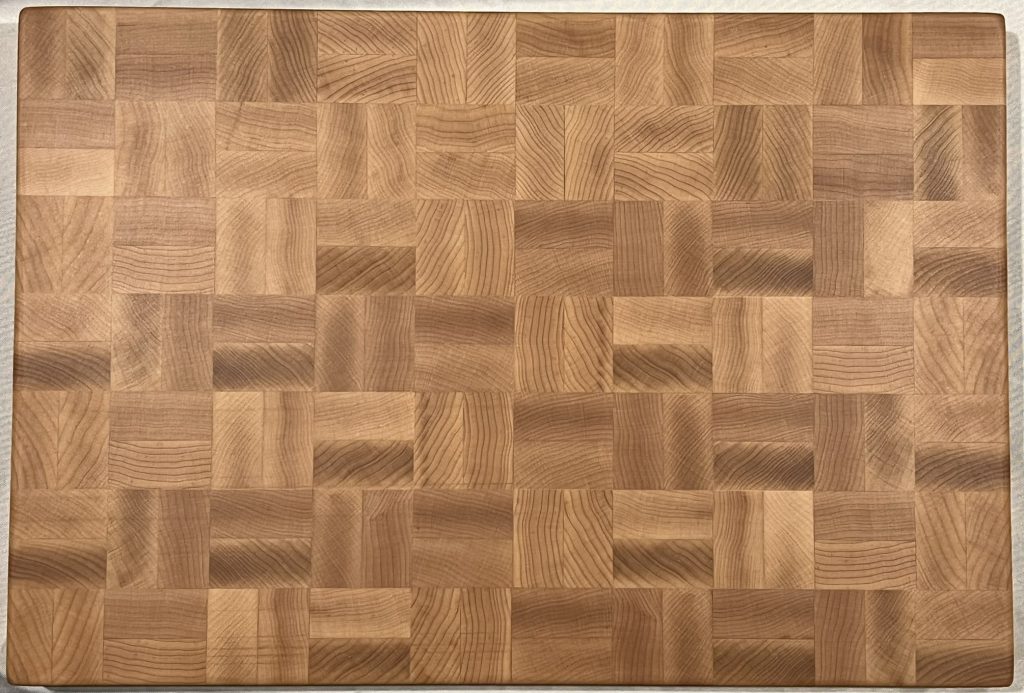
Clea4
Like Clea2 but with 4 pieces per block instead of 2. This is made with Ash.
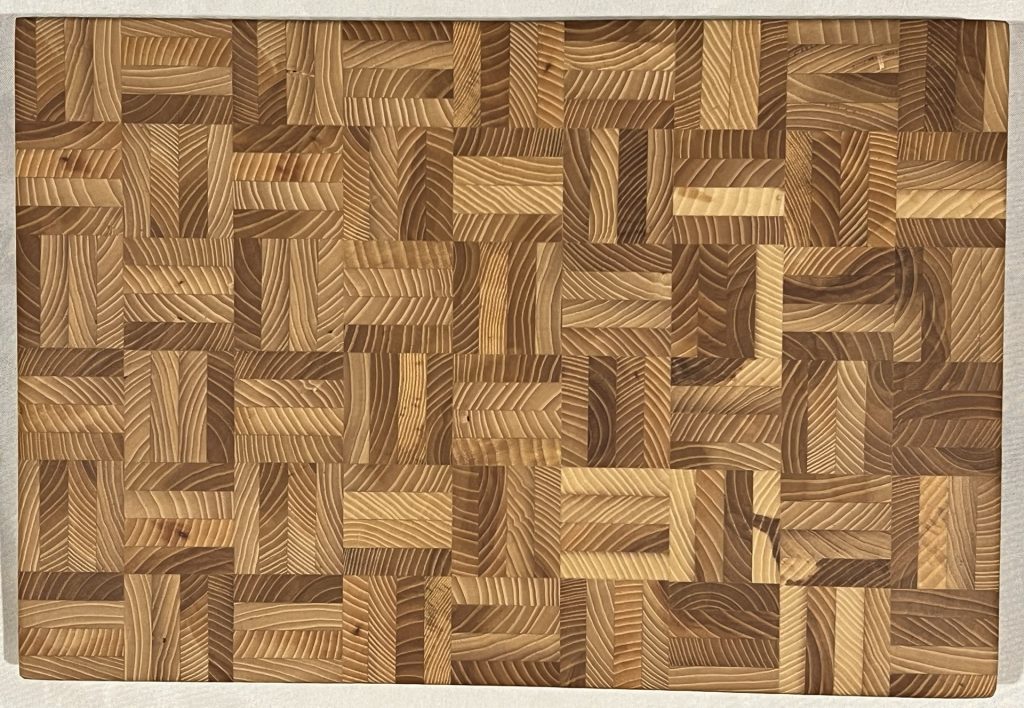
Weave 2.0
I’ve made some cutting boards that had a weave pattern. This is also a weave patter but is different than the original, so I call it weave 2.0. It’s made with cherry and maple.
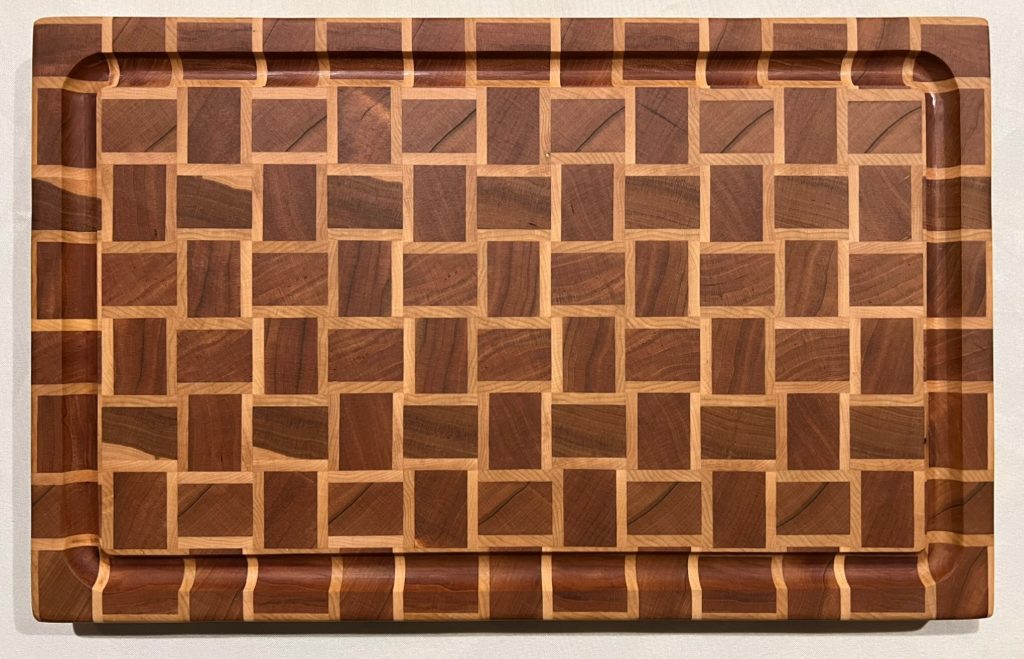
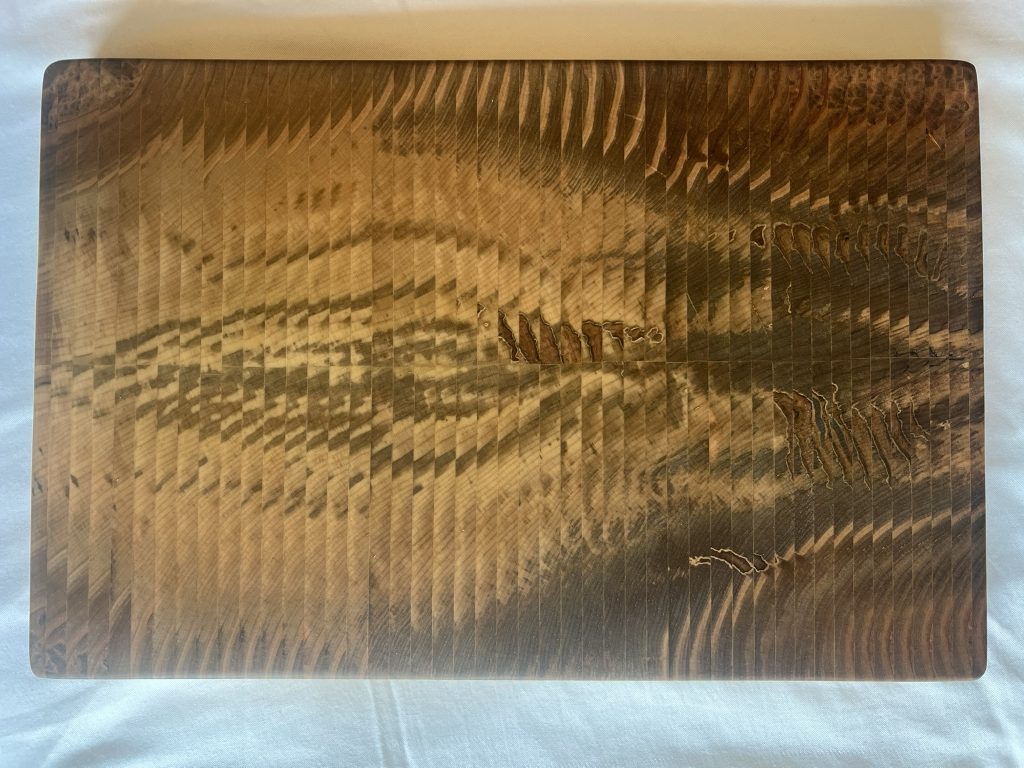
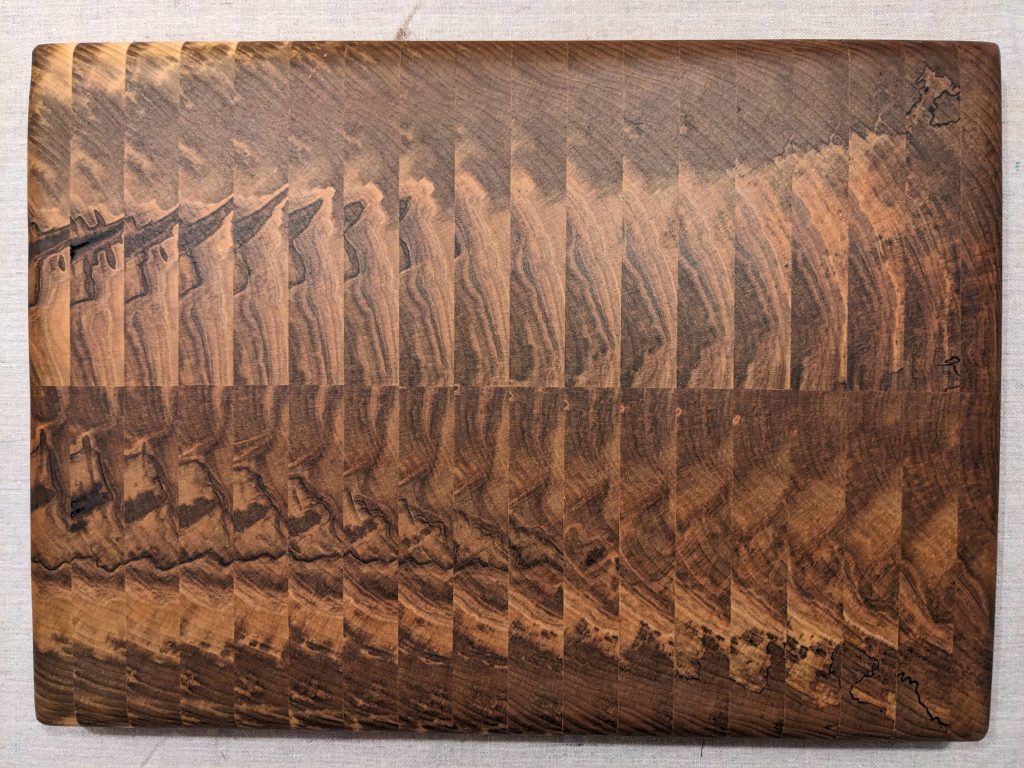
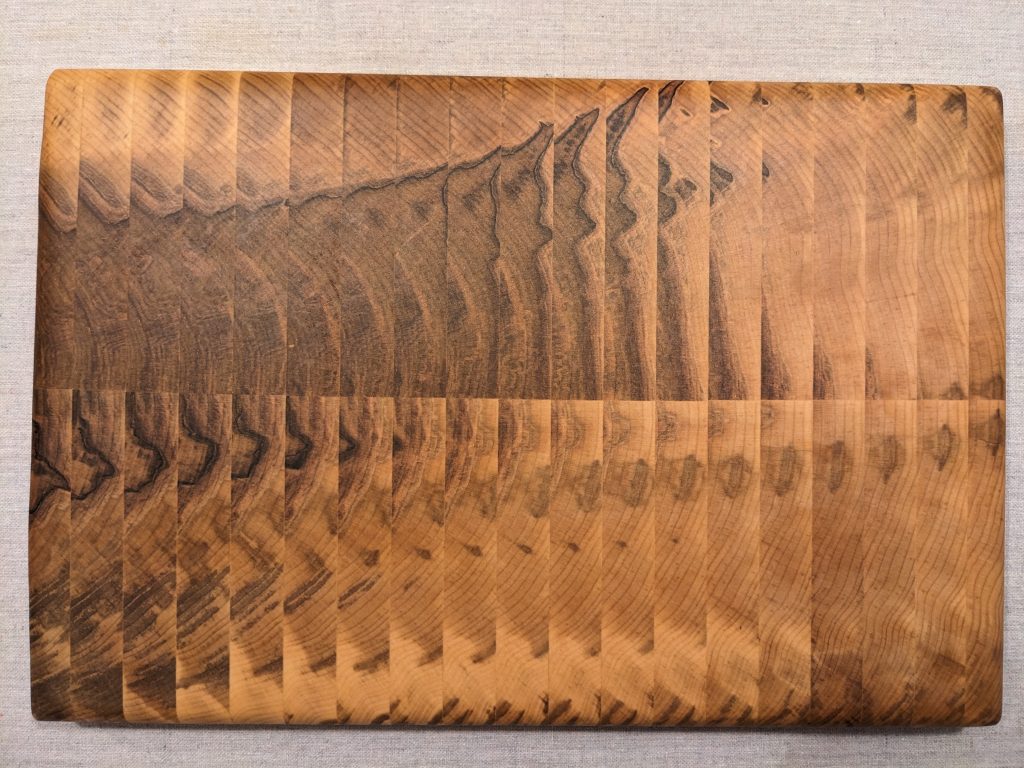
Book matched Ambrosia Maple
The top half and the bottom half are ‘book matched’. This didn’t come out quite as I had expected. I think this pattern is more dependent on Mother Nature than many of my other patterns.
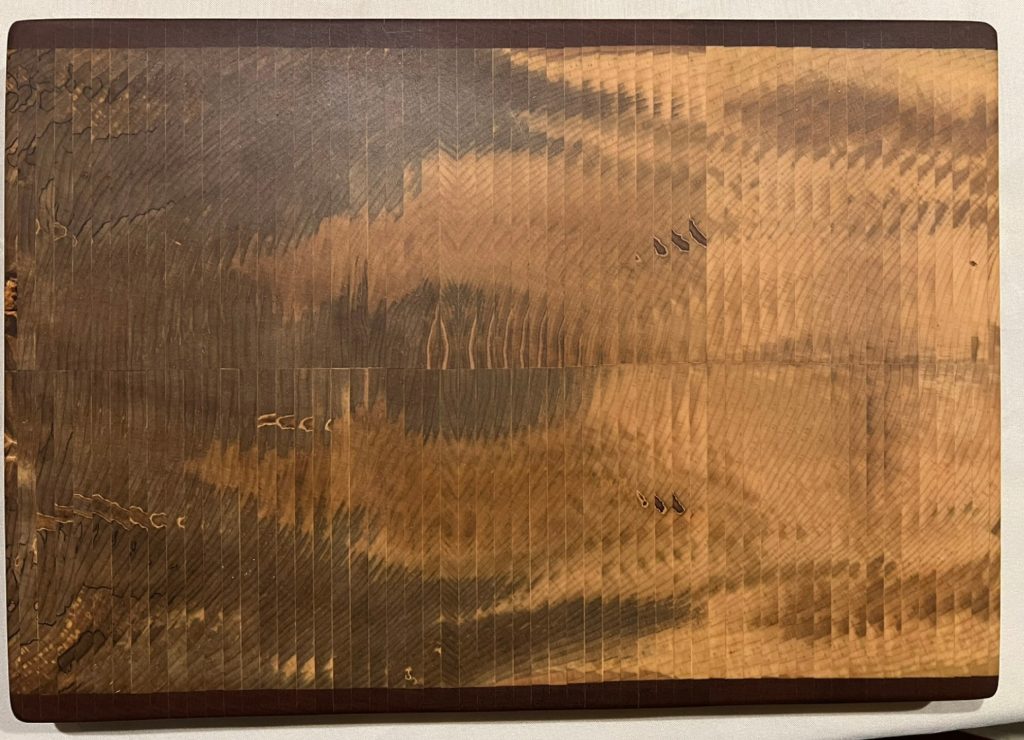
Leftovers
Who doesn’t like some leftovers once in a while. This is made of parts from many other boards.
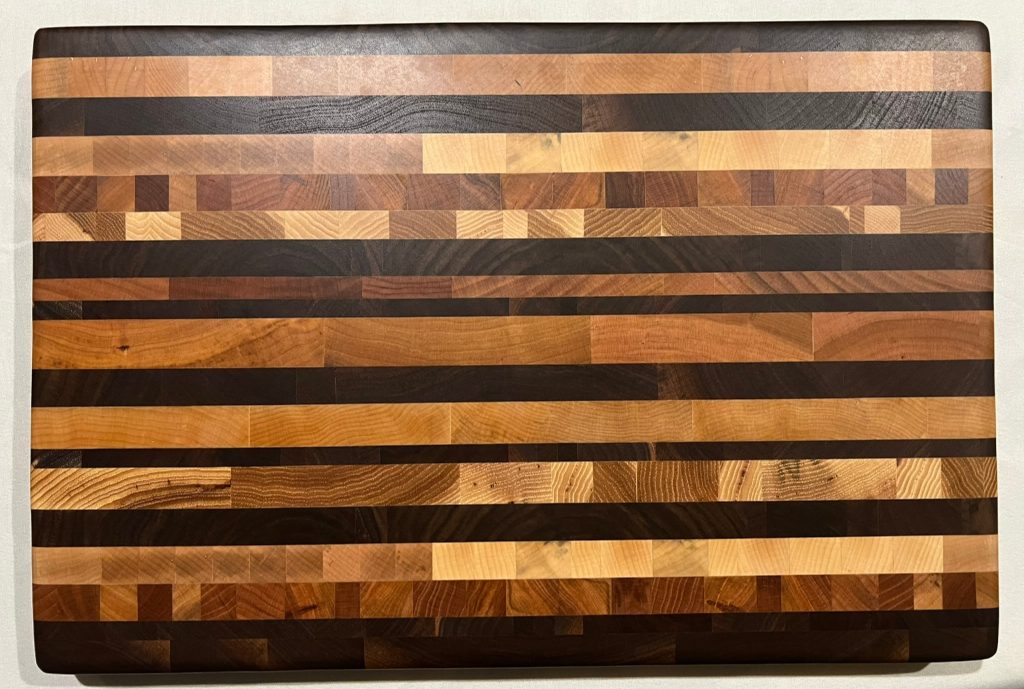
Book matched walnut
Book matched sections of walnut make up most of this cutting board then there is a thin strip of maple and finally an outside boarder of sapele.
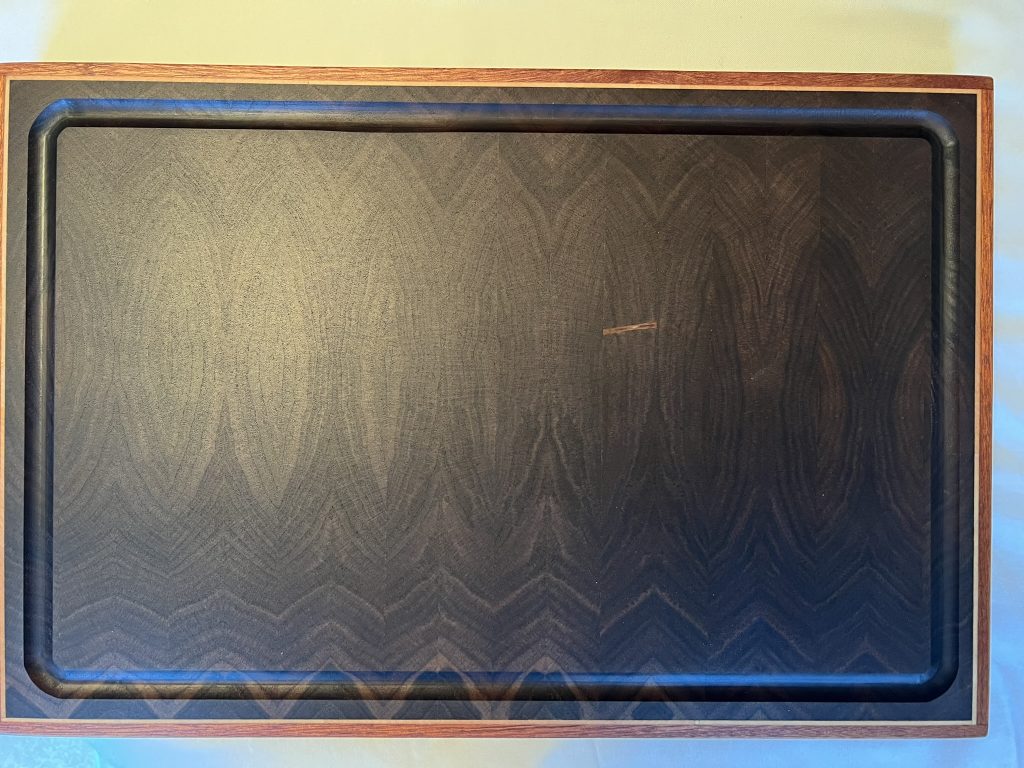
Ambrosia Maple
Mixed up leftover pieces of ambrosia maple.
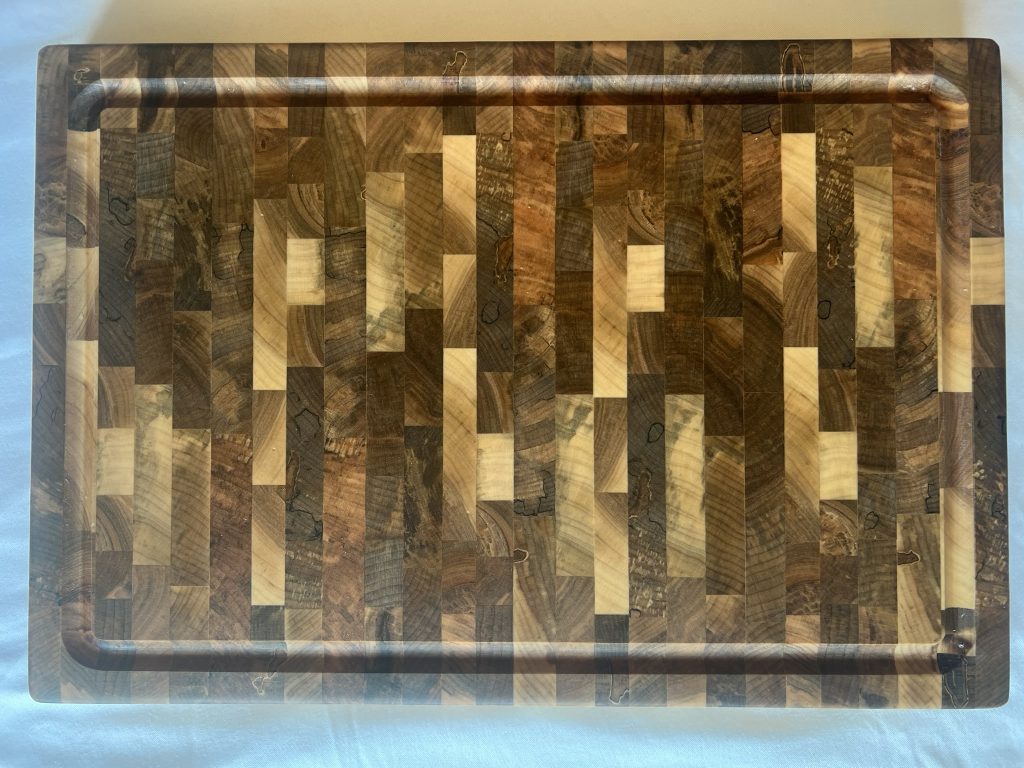
The Weave
Maple, walnut and hickory (shown), I’ve also made this with maple, walnut and cherry.
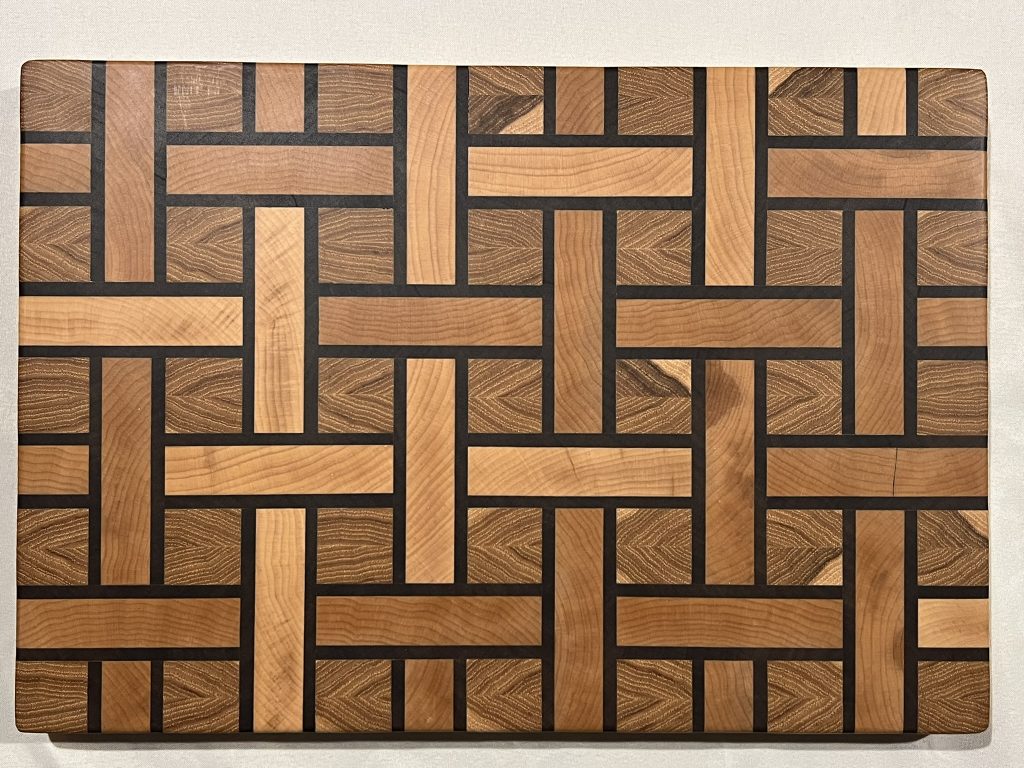
Just walnut
The title says it all. I really like these; they are simple but attractive (the photo doesn’t do it any justice).
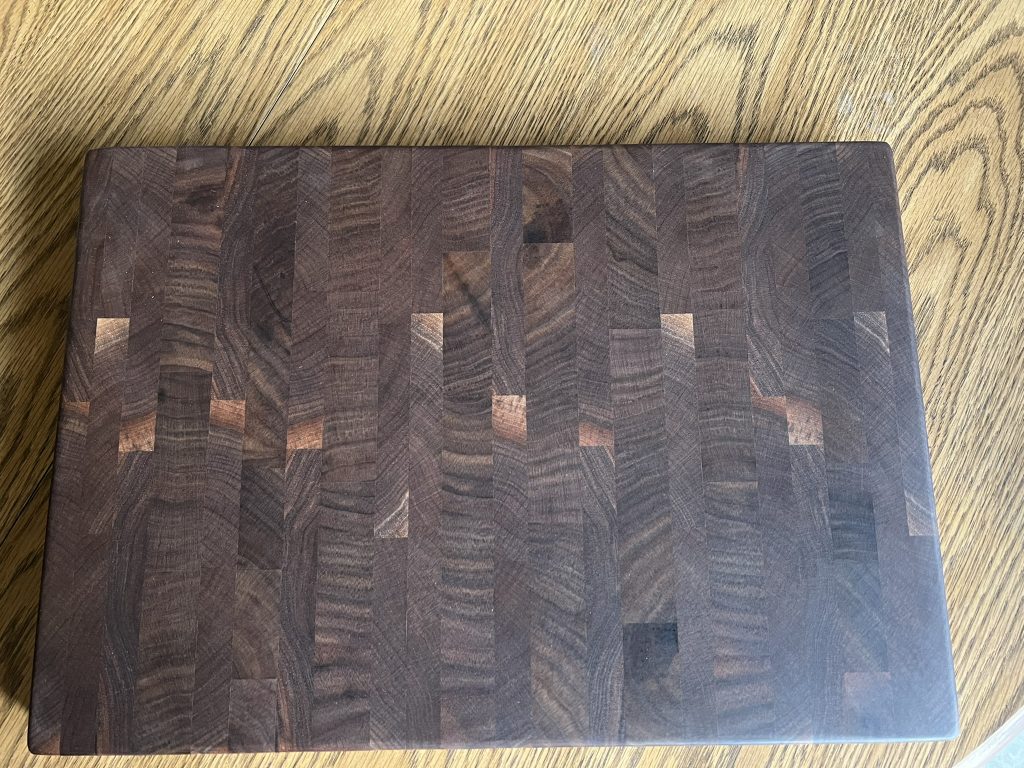
Just cherry
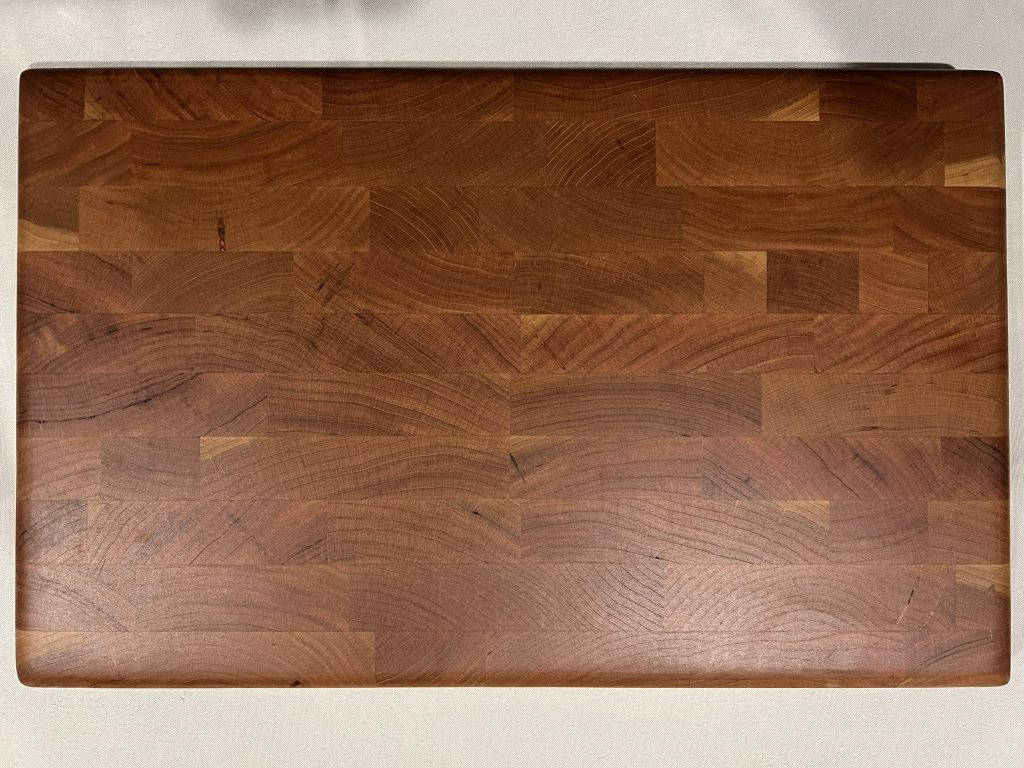
Curves
This one is walnut and cherry where the cherry is in the middle.
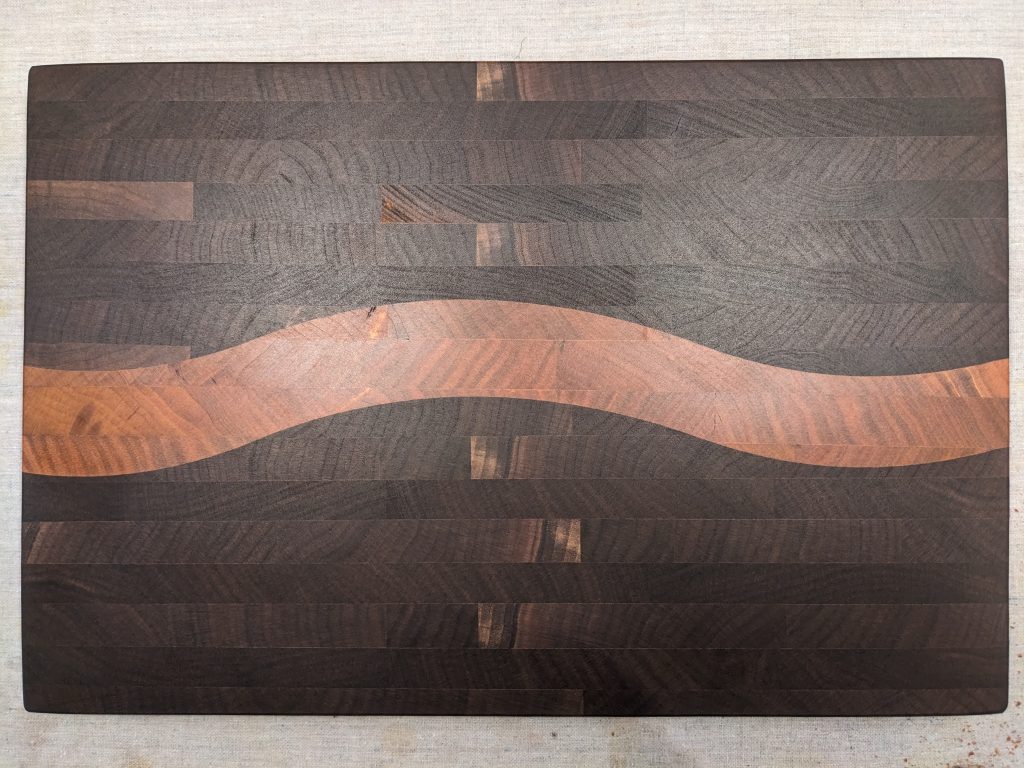
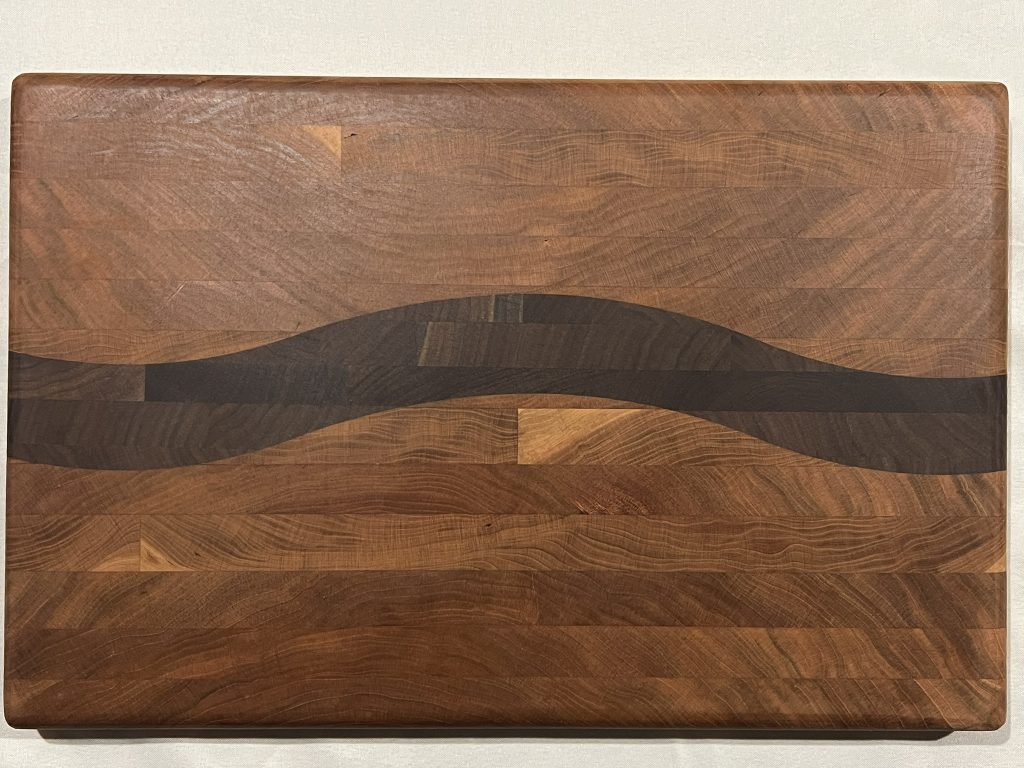
Curves
This one is cherry and walnut where the walnut is in the middle.
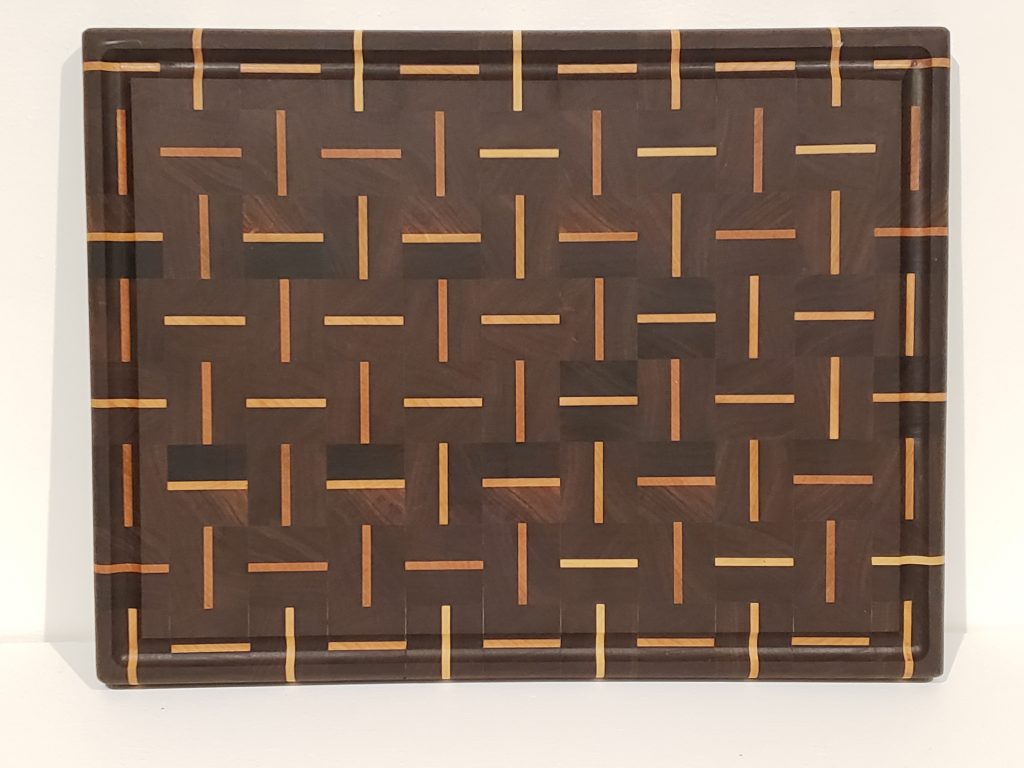
Pig Standard
I seem to make a fair amount of this pattern. The first one is walnut with thin strips of maple, the second is maple with thin strips of walnut and the third is ambrosia maple with thin strips of walnut.
Leftovers
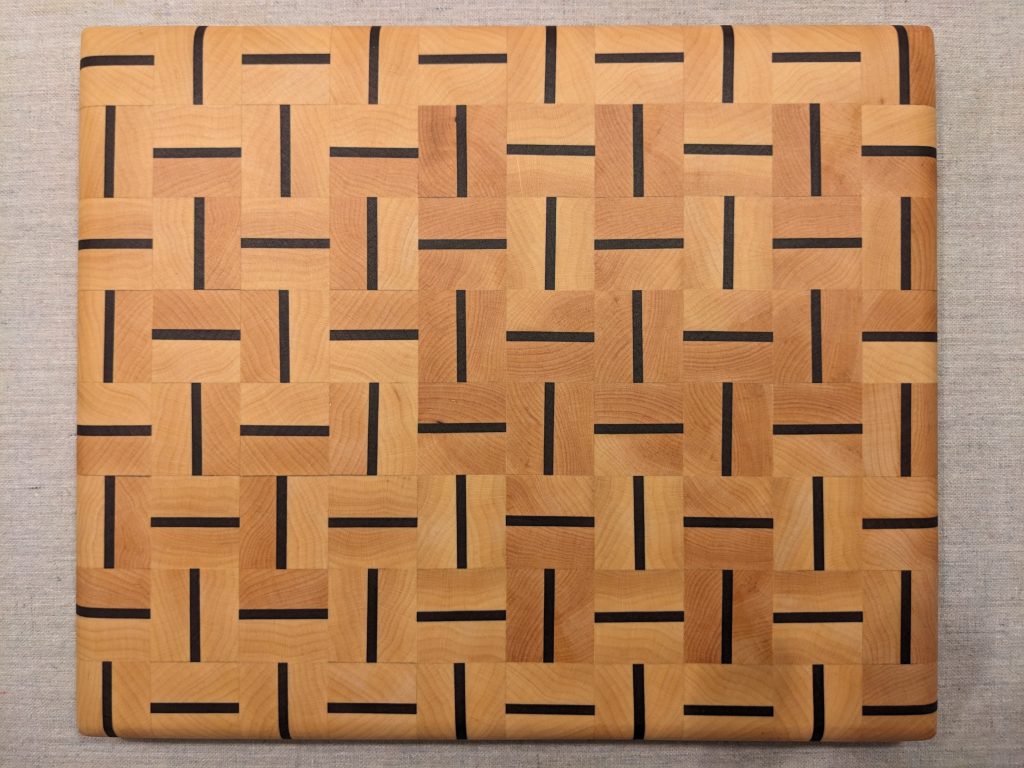
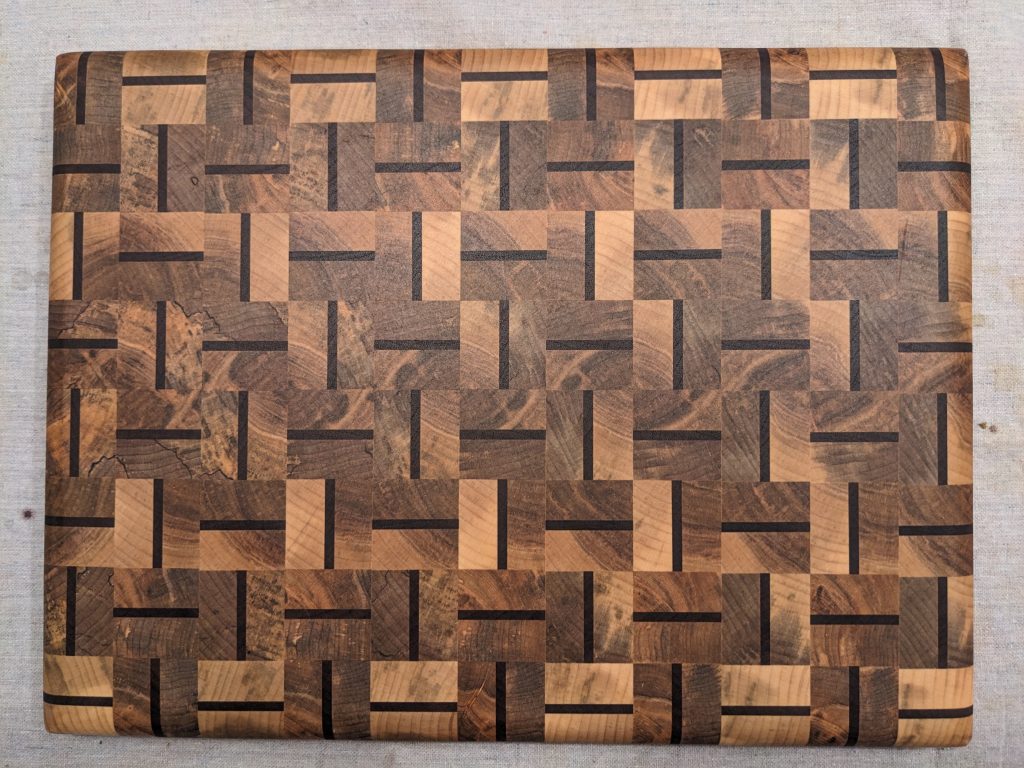
I had some leftovers from “The Standard” so I added some blocks of maple.
Book matched Ambrosia Maple
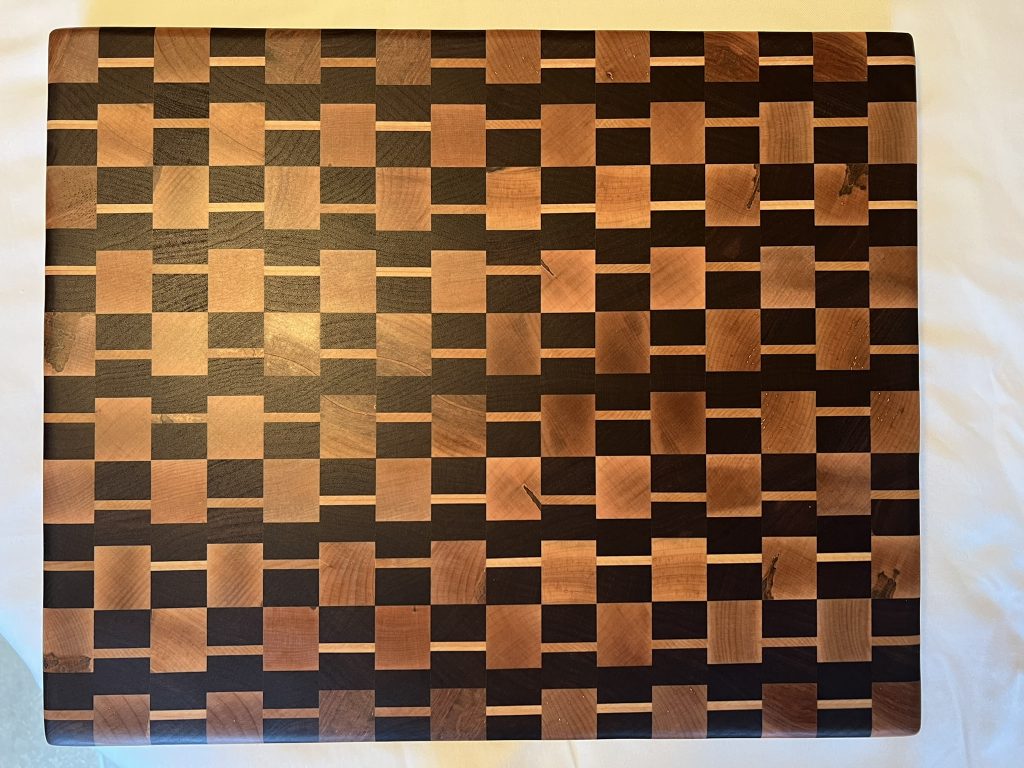
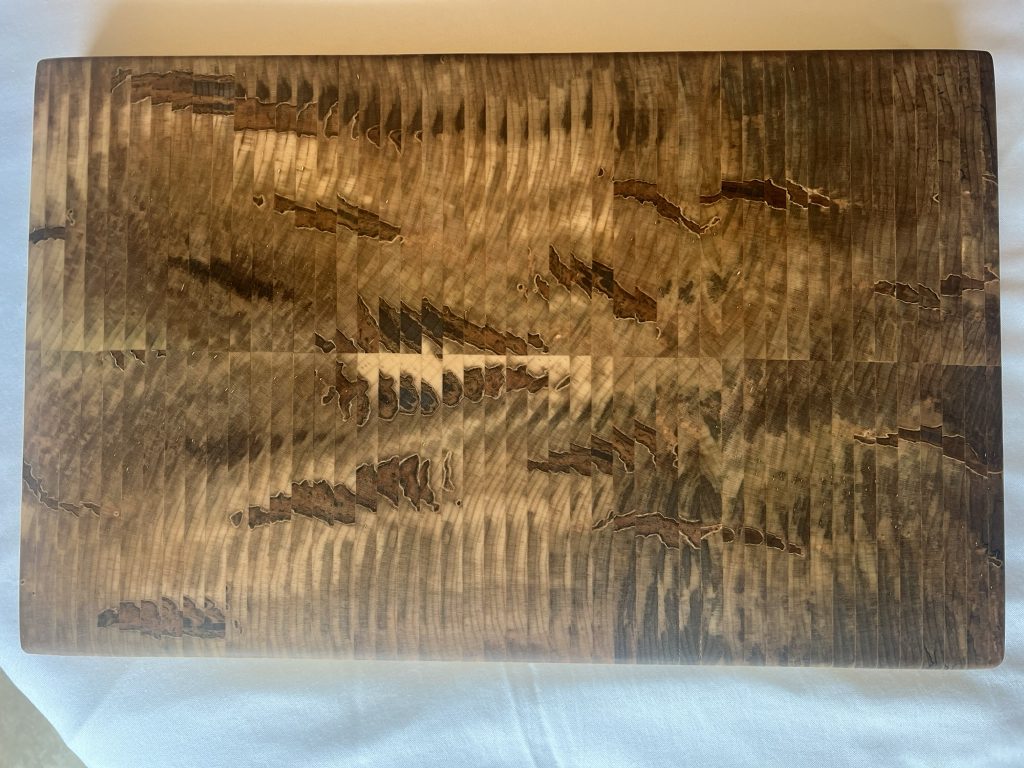
Played with a different way to book match some highly figured wood. Here are 2 of the results:
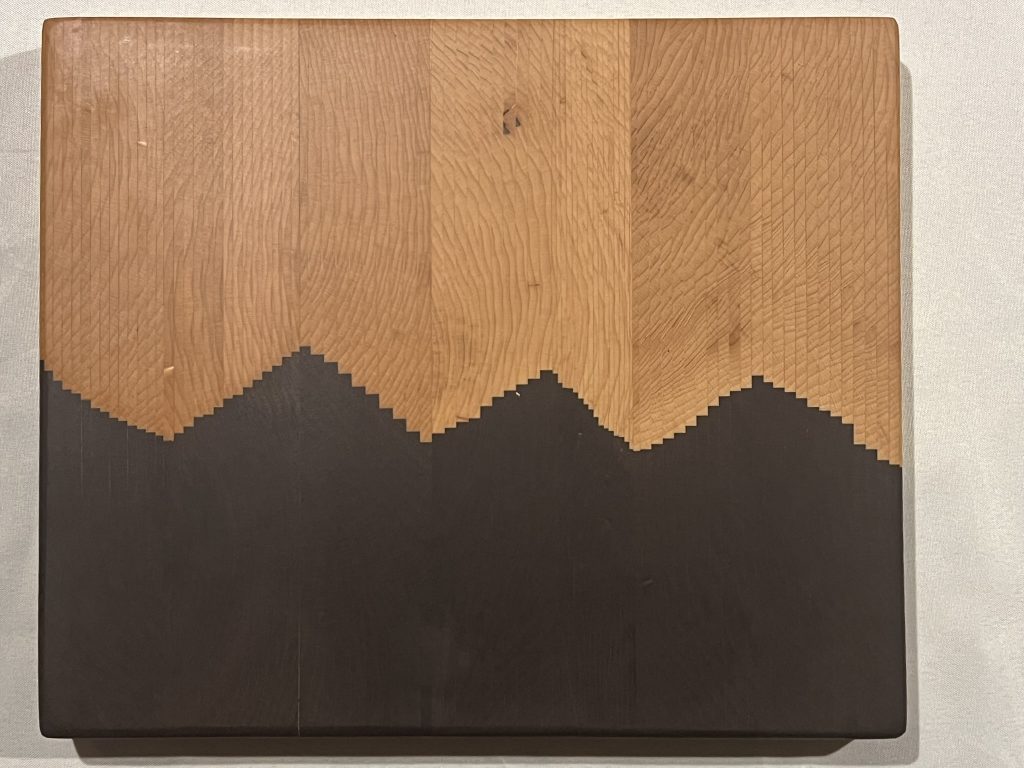
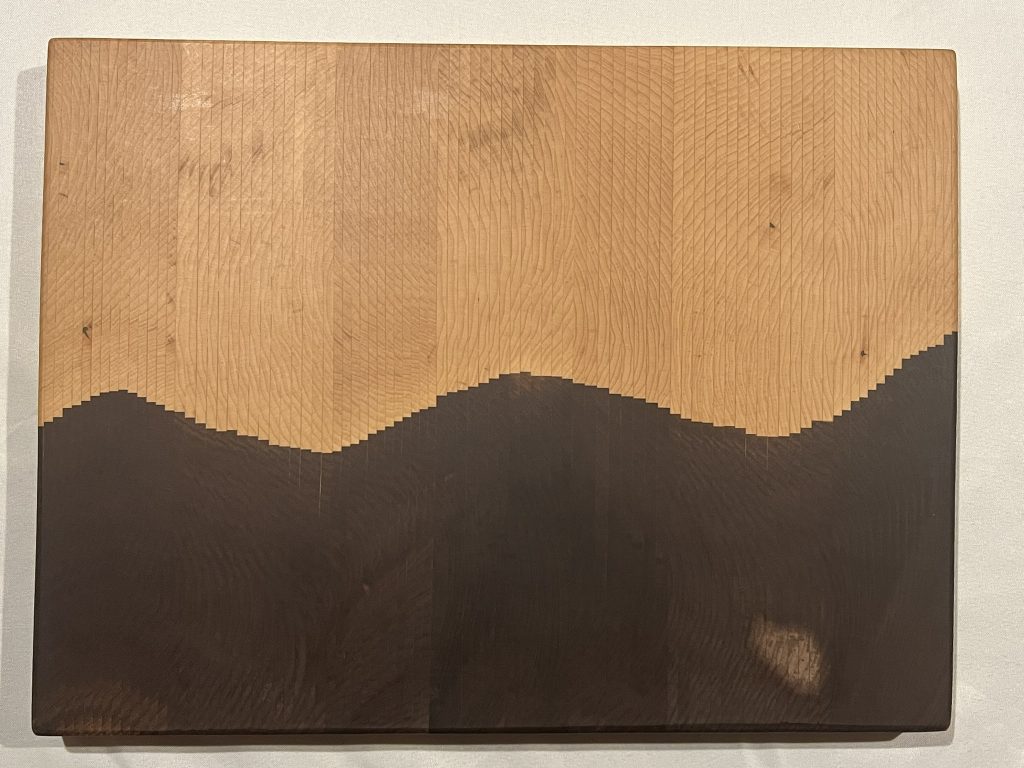
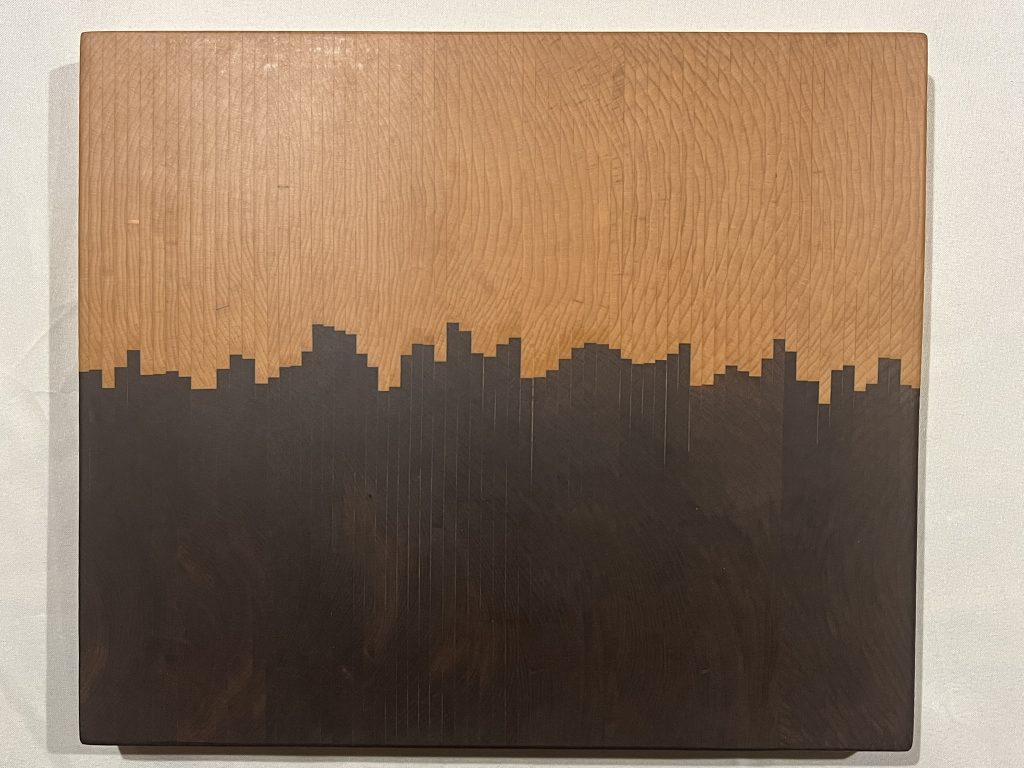
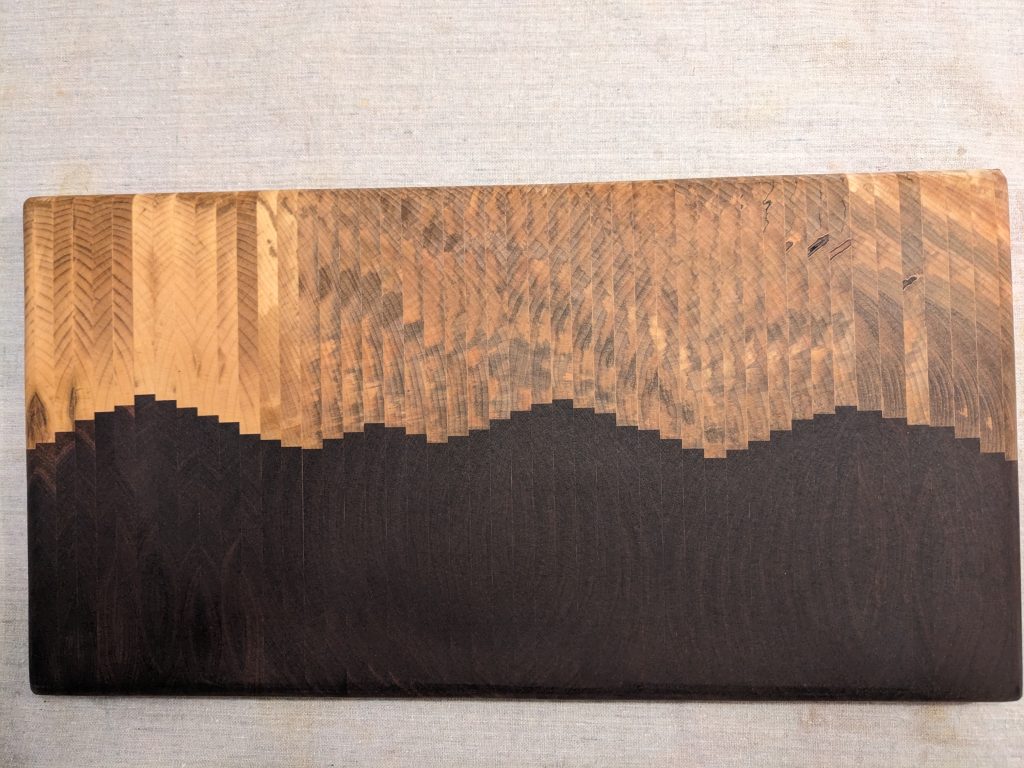
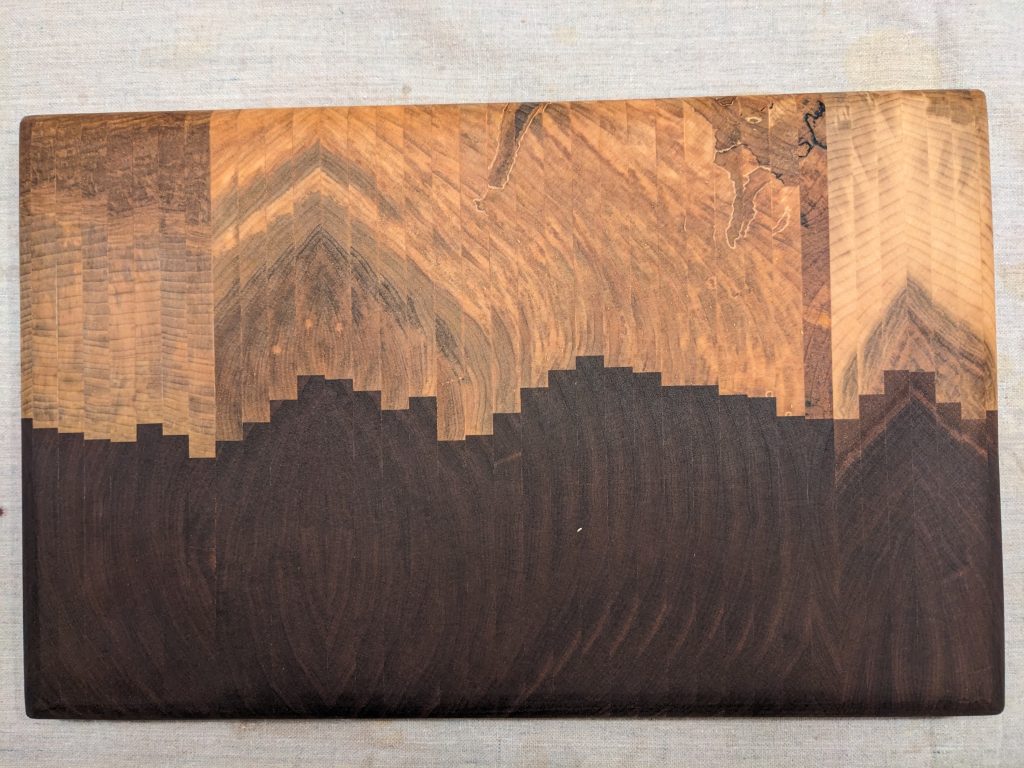
Mountains / Cityscape
These look like a mountain range or cityscape.
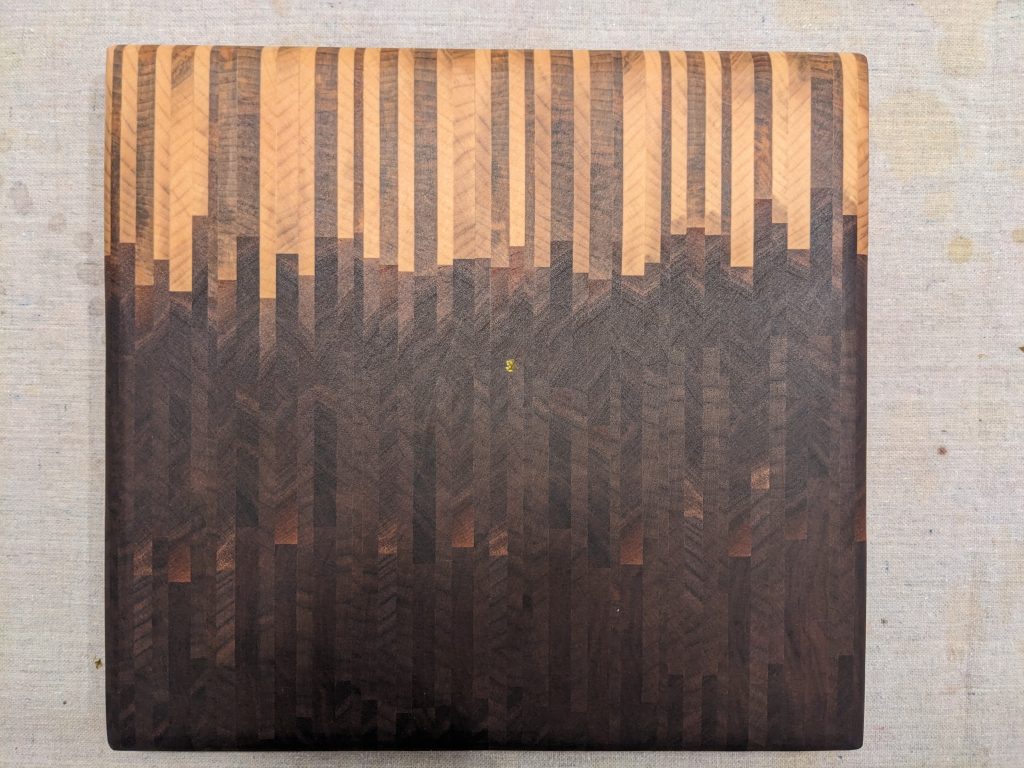
Various boards
A sample of some of the boards I’ve made.
Rectangles
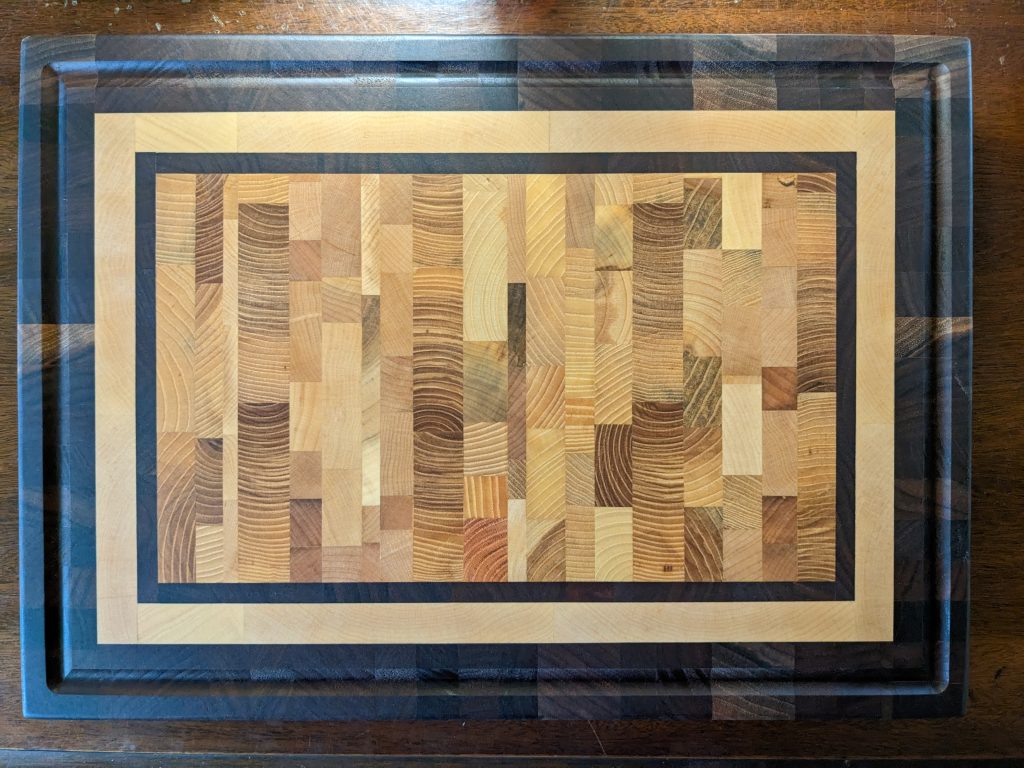
I had some feedback that some of my cutting boards were a little “busy” so I wanted to make one that was a little cleaner. I’m not sure if this fits the bill or not but I do like the way it came out. The center is almost all ash (there a few pieces of maple in there). Working from the inside to the outside, the next rectangle is walnut, then maple with the outside walnut. The rectangles get progressively larger each time. There is a juice slot on one side. You can flip the cutting board over and use both sides. It measures 17 inches long, 12 1/2 inches wide and 1 3/4 inches thick.
Pattern 3
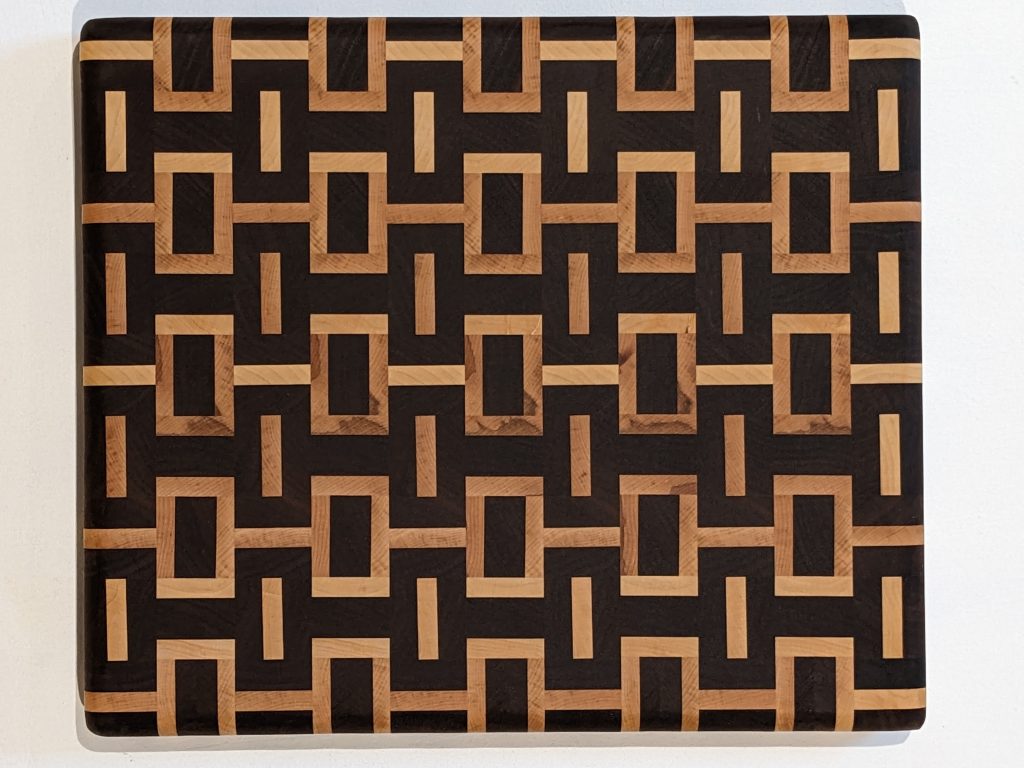
I’m not really sure what to call this pattern so I just call it pattern 3. It’s made with walnut and maple. It wasn’t difficult to build, once I had the dimensions figured out. Some people may think it’s a little to busy. What do you think? Please use the “Contact” page to let me know.
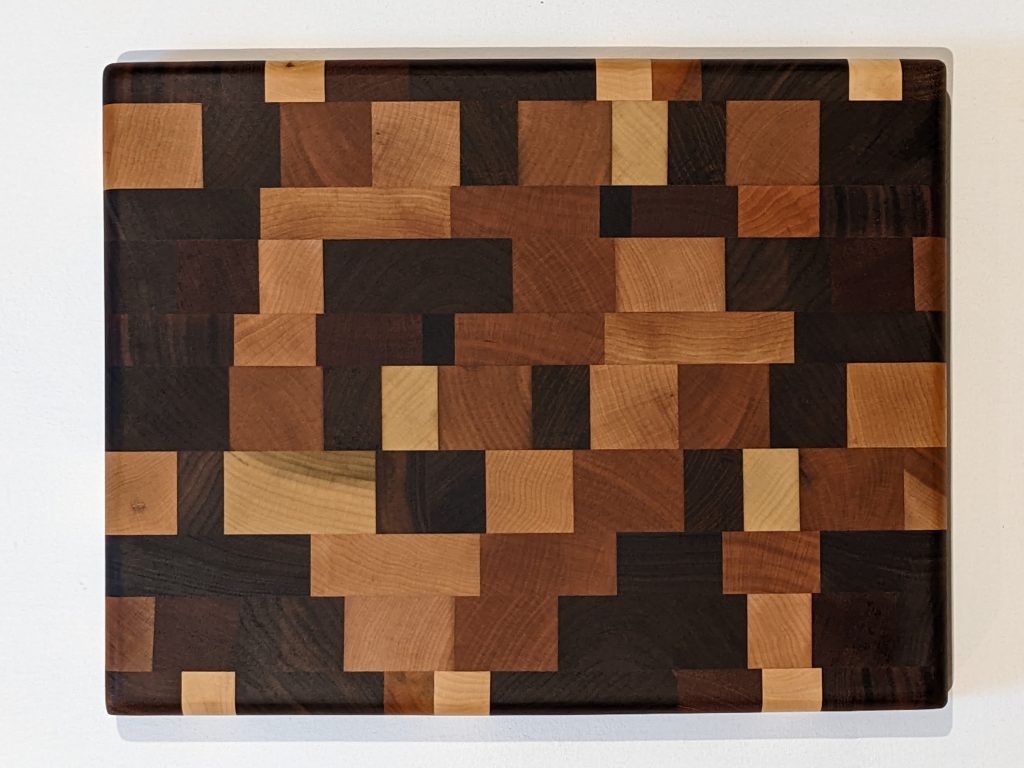
2nd Generation Mixed Species
Some friends of mine moved into a new house. The previous owner left a lot of stuff in the house from them to take care of, including a large pile of scraps of wood. My friends had little (or no) use for it, so I picked thru it and took some pieces. They were all short and mostly thicker than normal. I used these scraps to make several cutting boards.
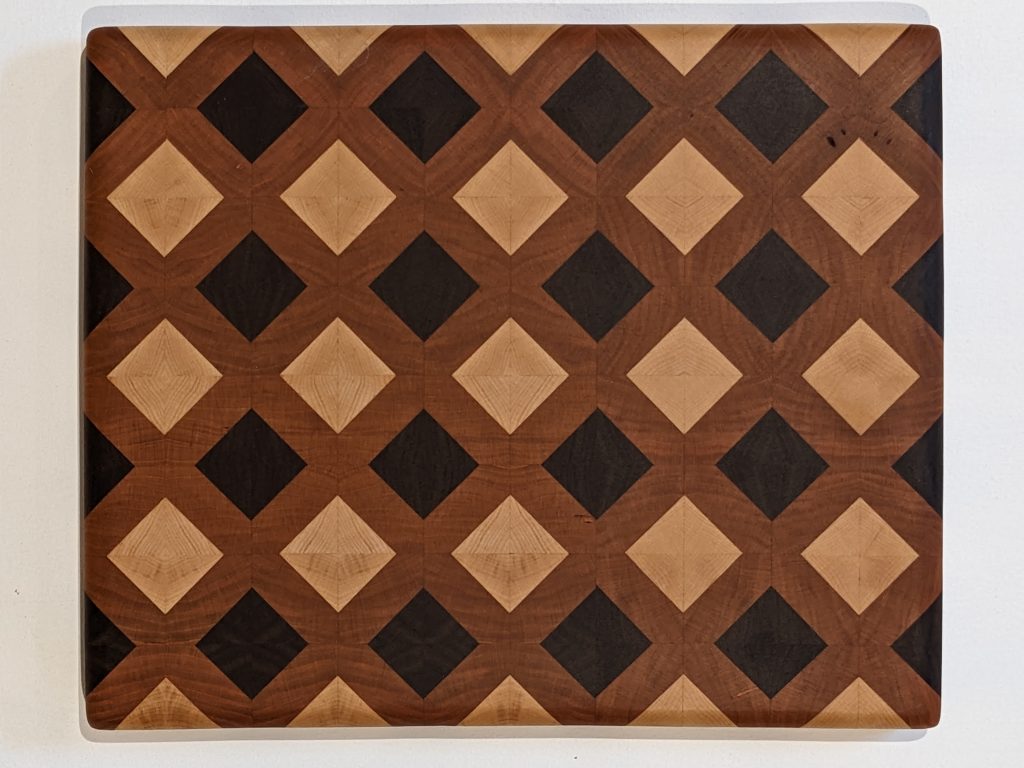
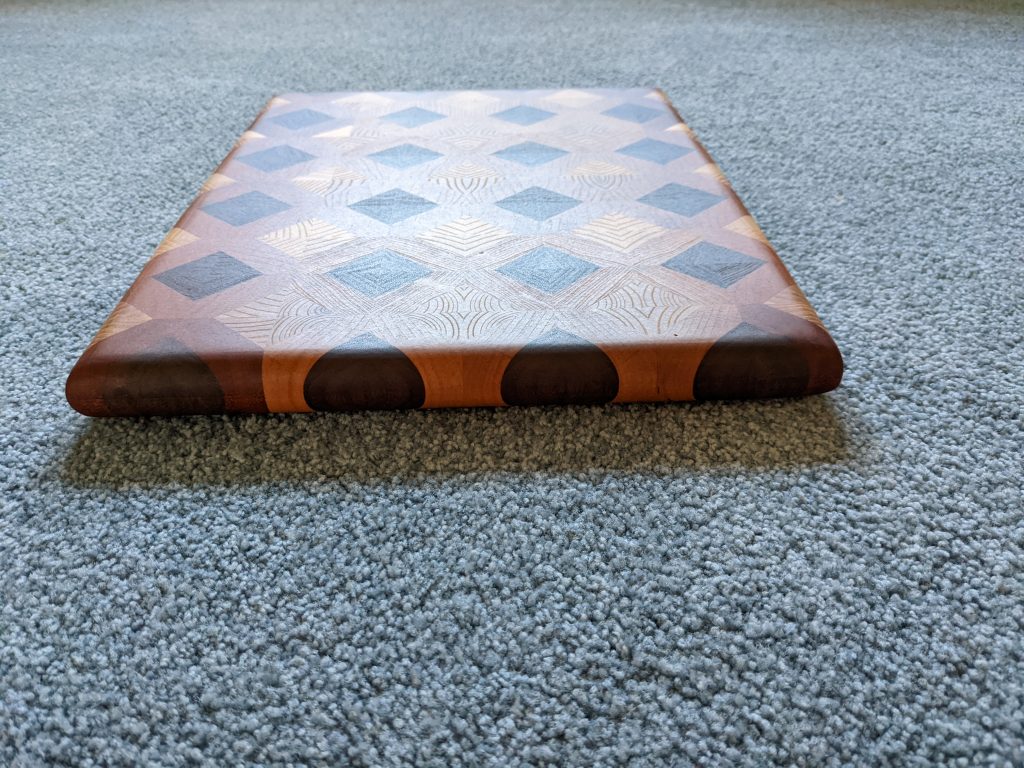
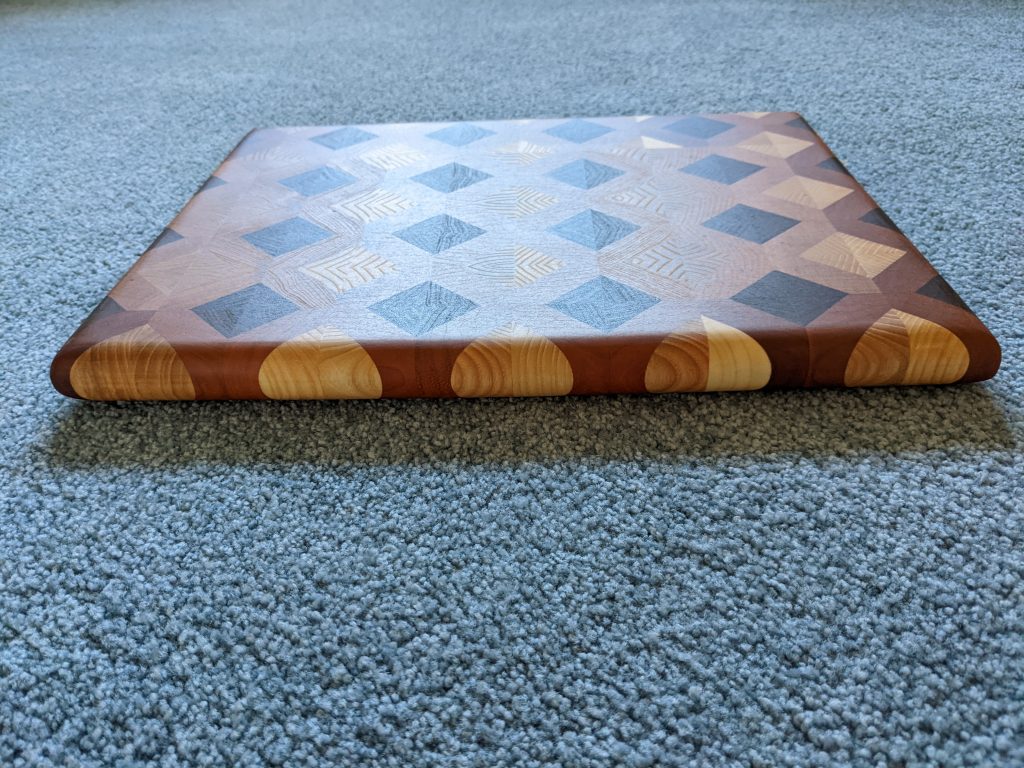
Diamonds
Made with walnut, ash, and cherry with a little maple here and there.
Blocks
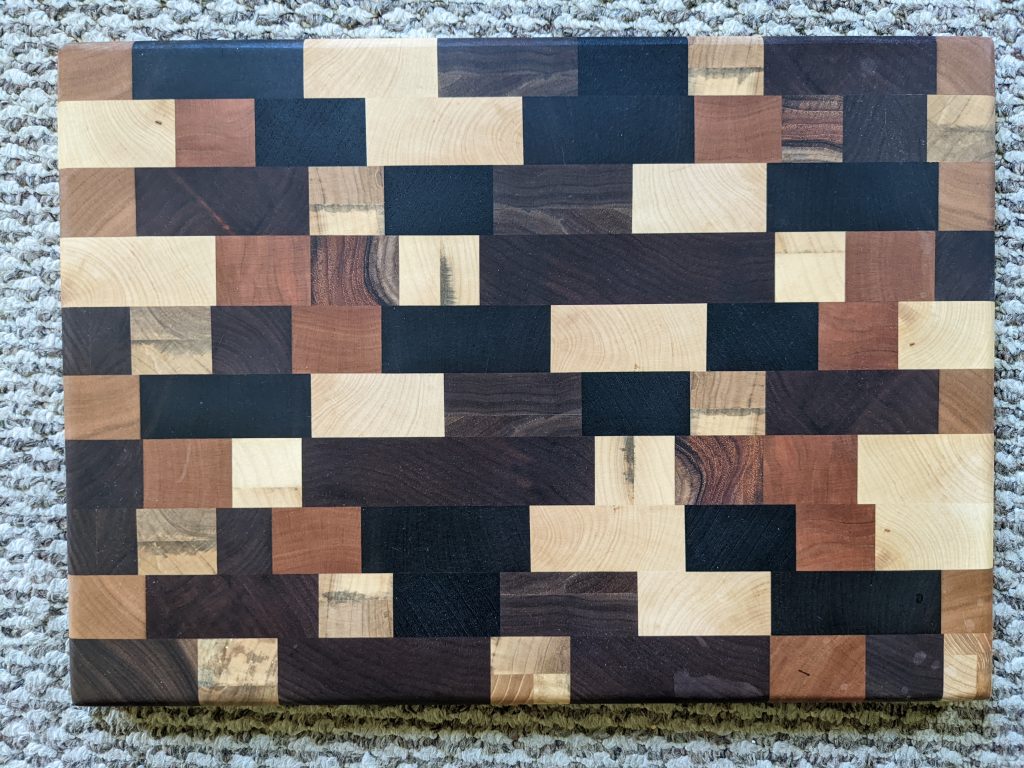
Made with some scraps that were greater than the standard 3/4-inch stuff. This was a one-of-a-kind piece made for a member of my family.
Leftover teak
During the course of 2021 I made several cutting boards out of teak. I had some left-over pieces so I put together 3 more boards. The first one is 22″ x 13″ x 3/4″. The second is 16.5″ x 8″ x 1.5″ and the third is a big one, coming in at 24″ x 14.5″ x 1.5″.


Another teak goes out the door
2021 seems to be the year for teak cutting boards. This one measures 24″ long, 15″ wide and just under 1.5″ thick.
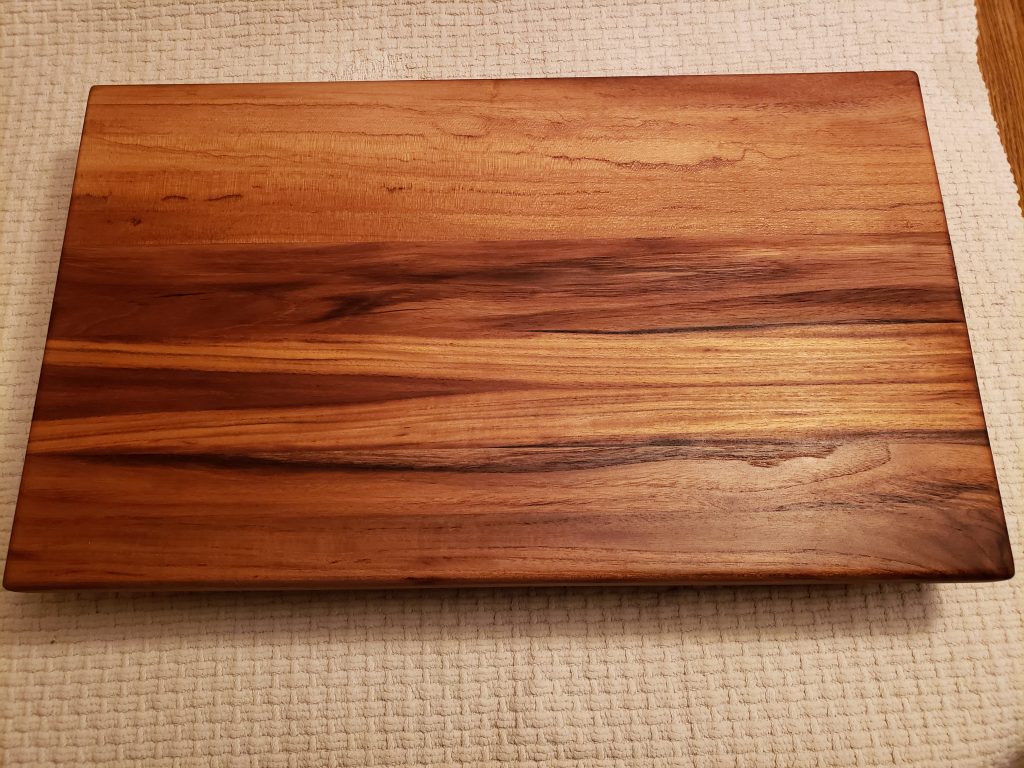
Large teak face grain cutting board
Teak is not very easy to find at the moment and what is around is quite expensive. However, a customer asked for a large teak board that was 32″ x 20″. While this board doesn’t have as much color variation as others I’ve made, I think the subtilty in this board make is quite nice.
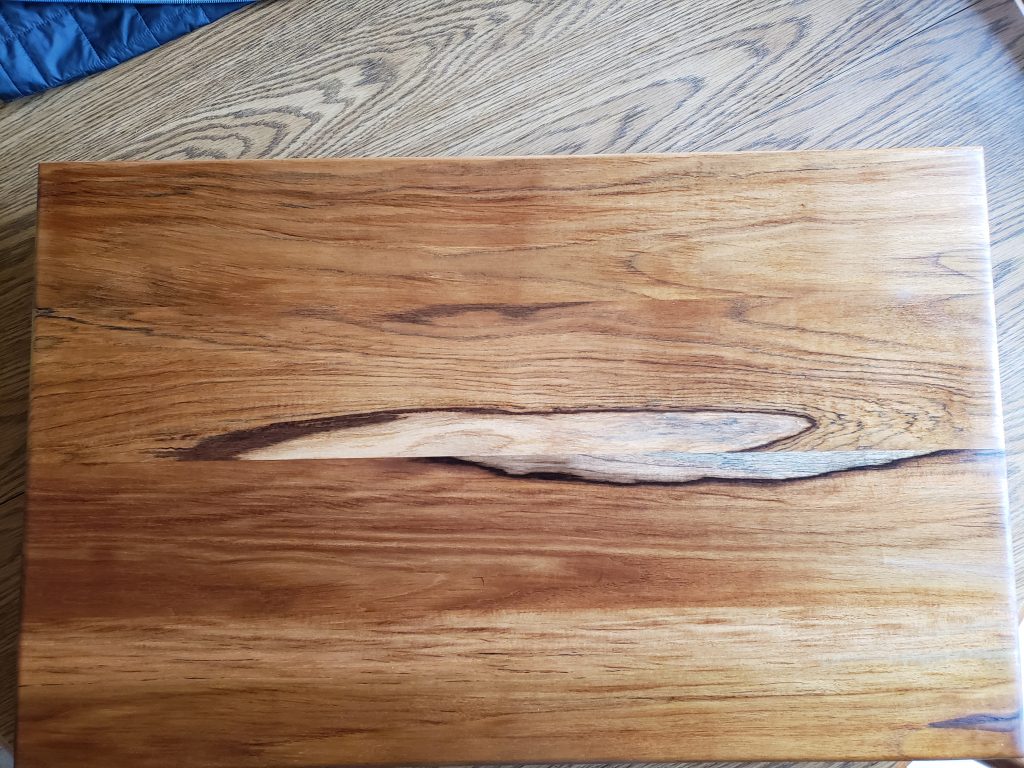
Teak face grain board
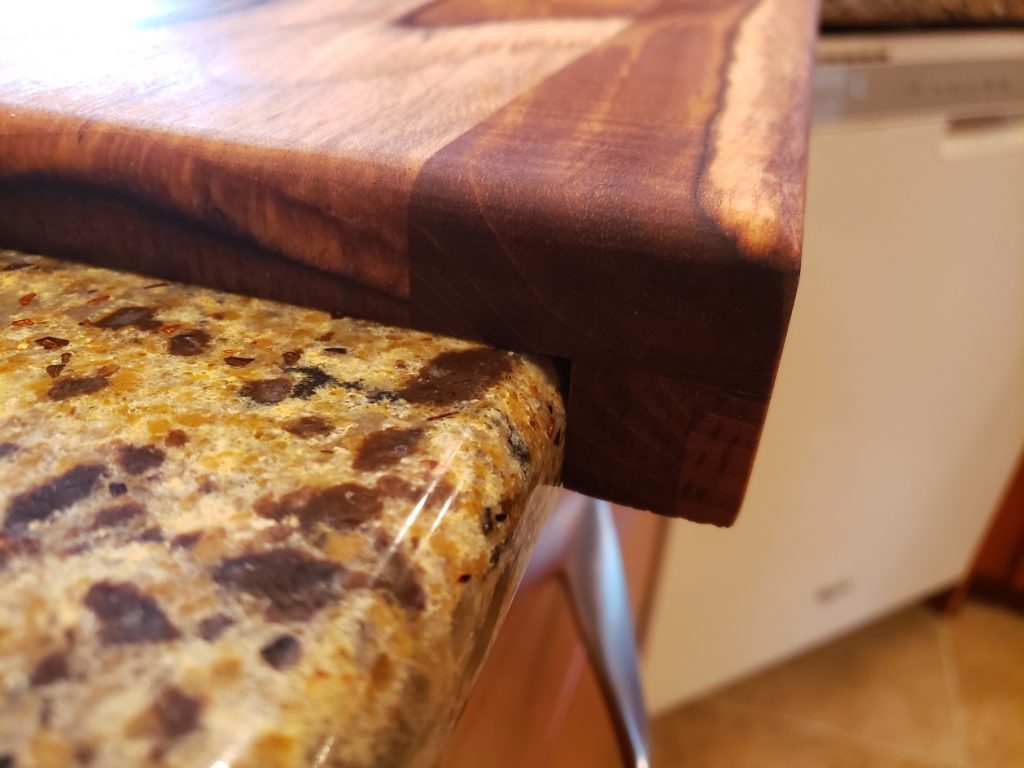
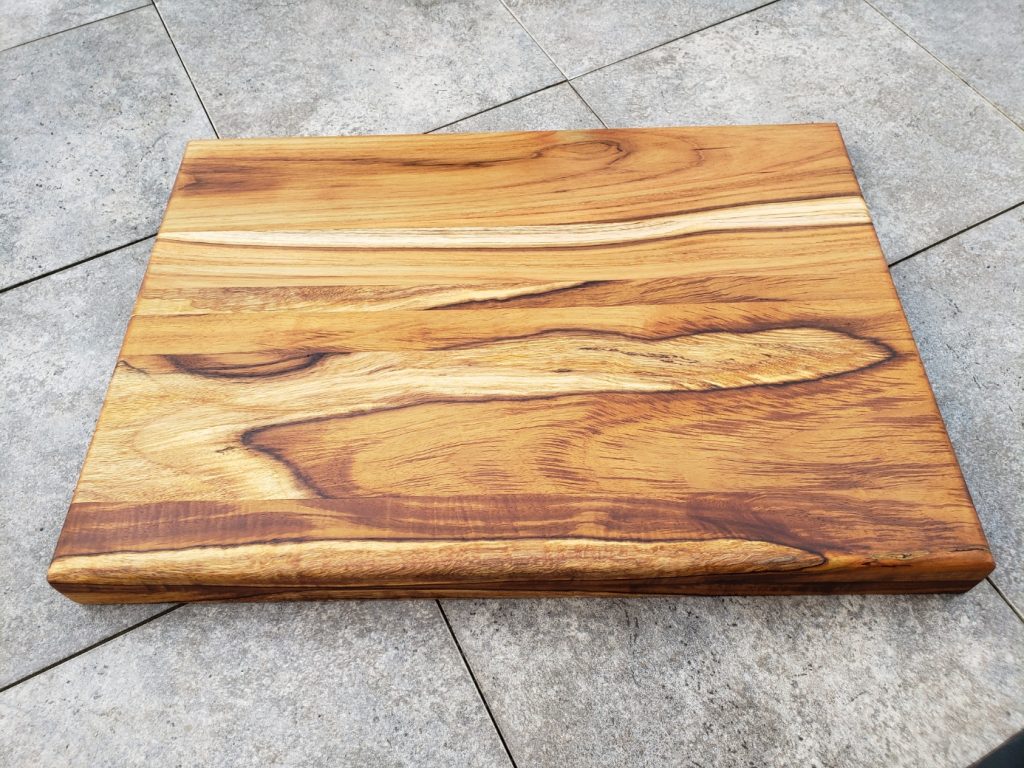
I had a custom order for a face grain (this is not end grain like I typically make) cutting board made out of teak. This board measures 21″ x 15″ and has a lip on the front that will hang over a counter and keep it in place. The finish is food safe mineral oil.
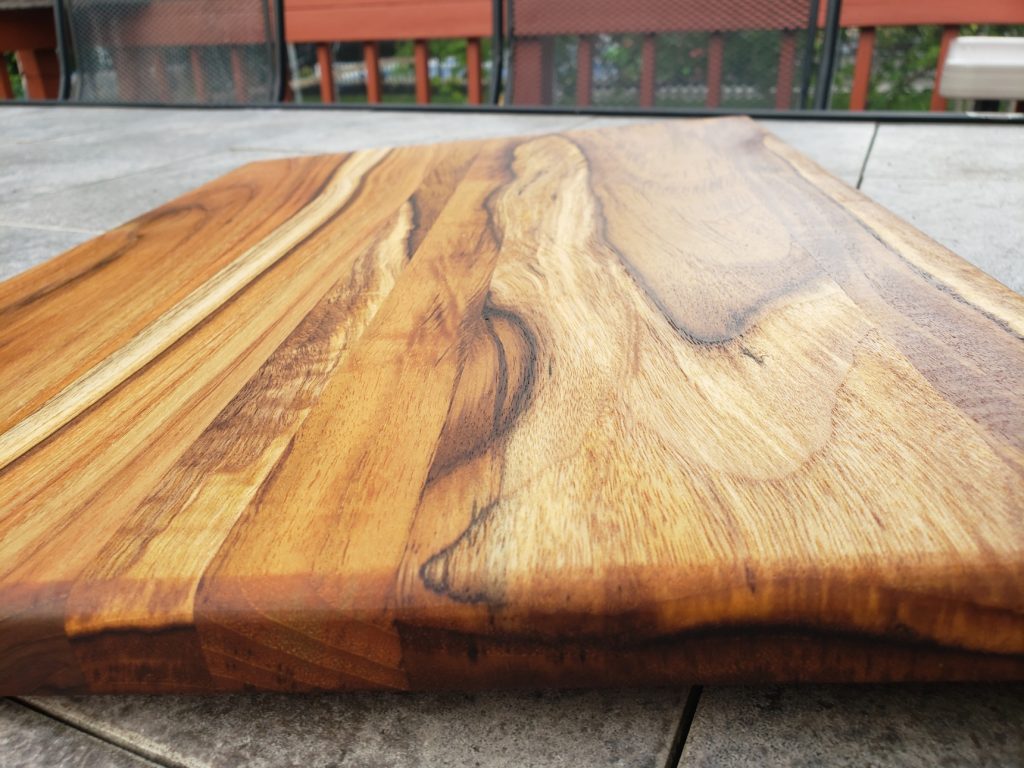
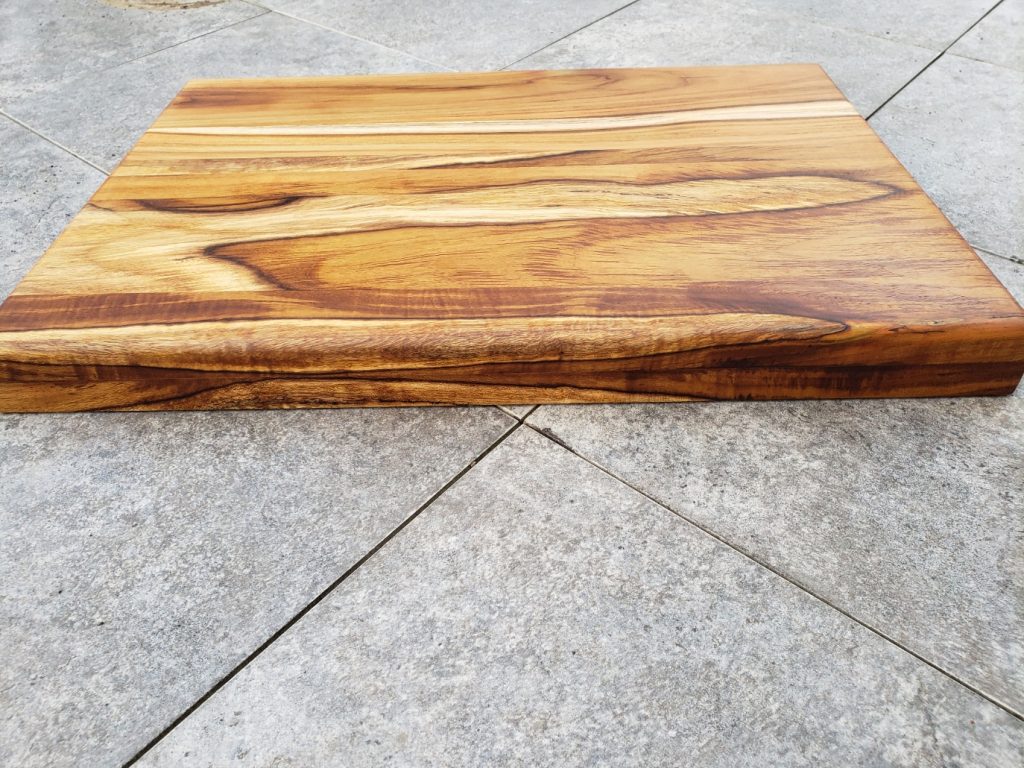
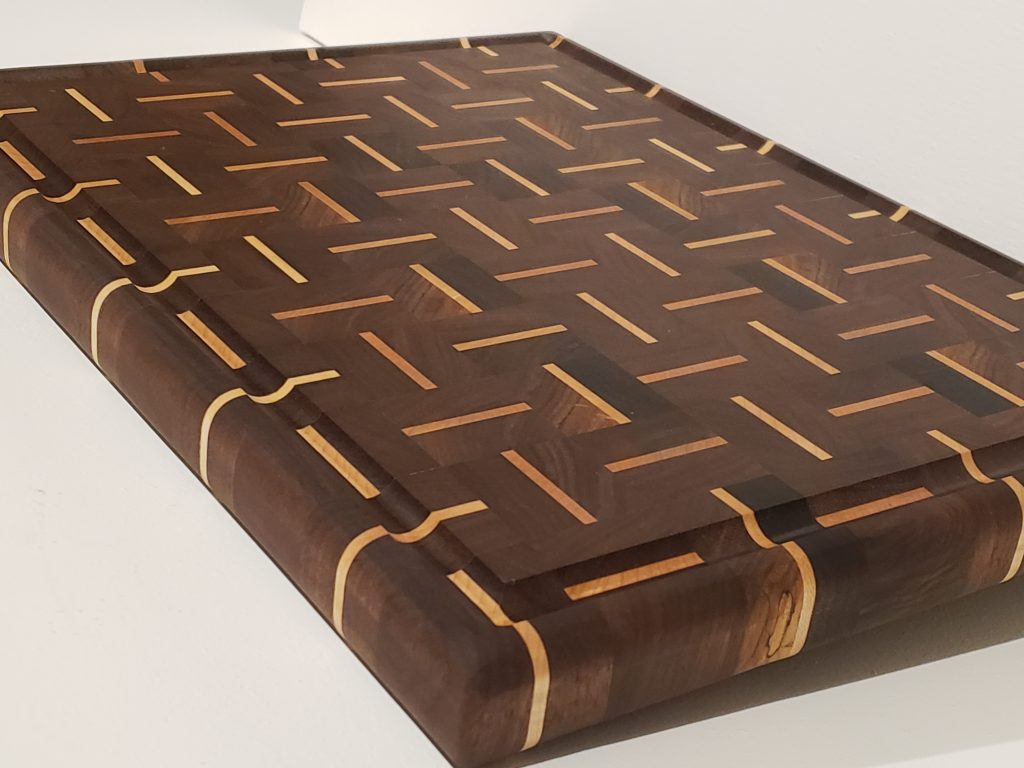
Walnut and Maple
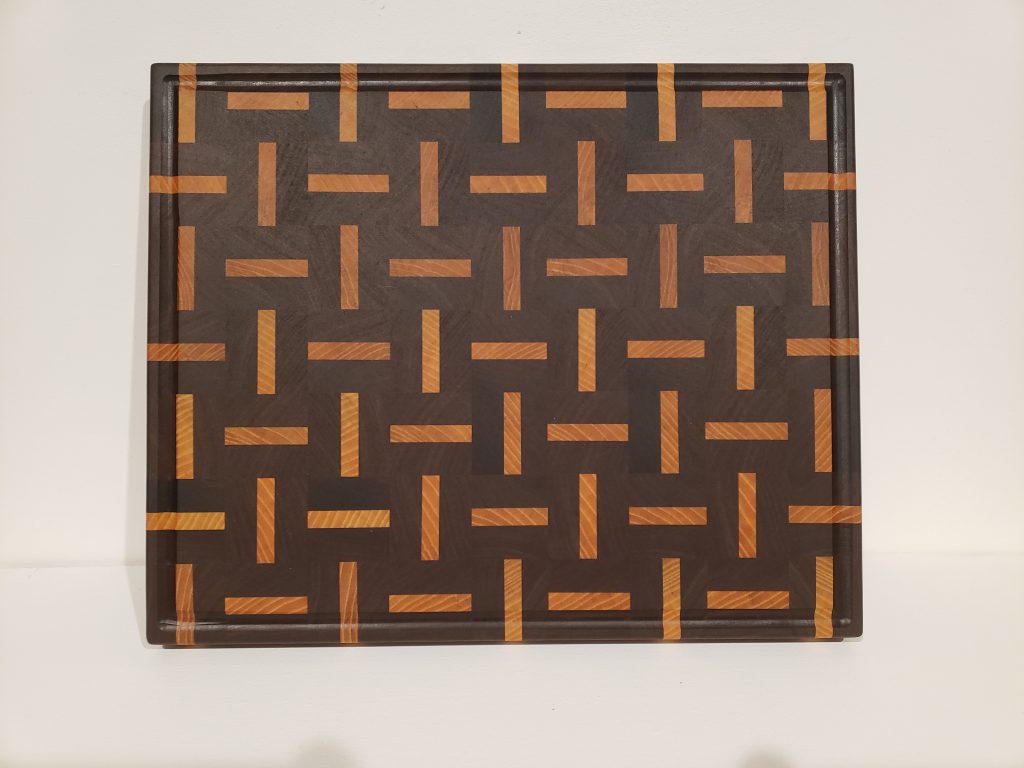
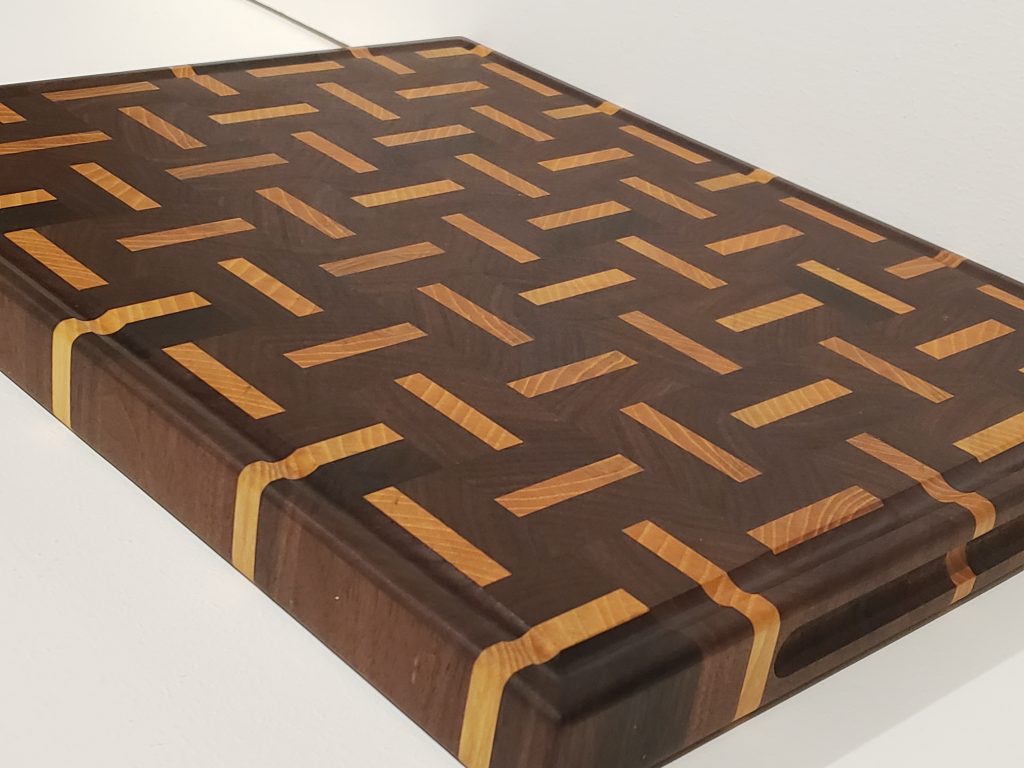
These end grain cutting boards are made using walnut and maple and finished with food safe mineral oil. The pattern is the same for both of them but the maple is thinner on one. Each has a juice slot on one side. Both can be turned over to use the side with the juice slot or the other side which will give you a bigger cutting surface. By being able to use both sides you getting two cutting boards in one.
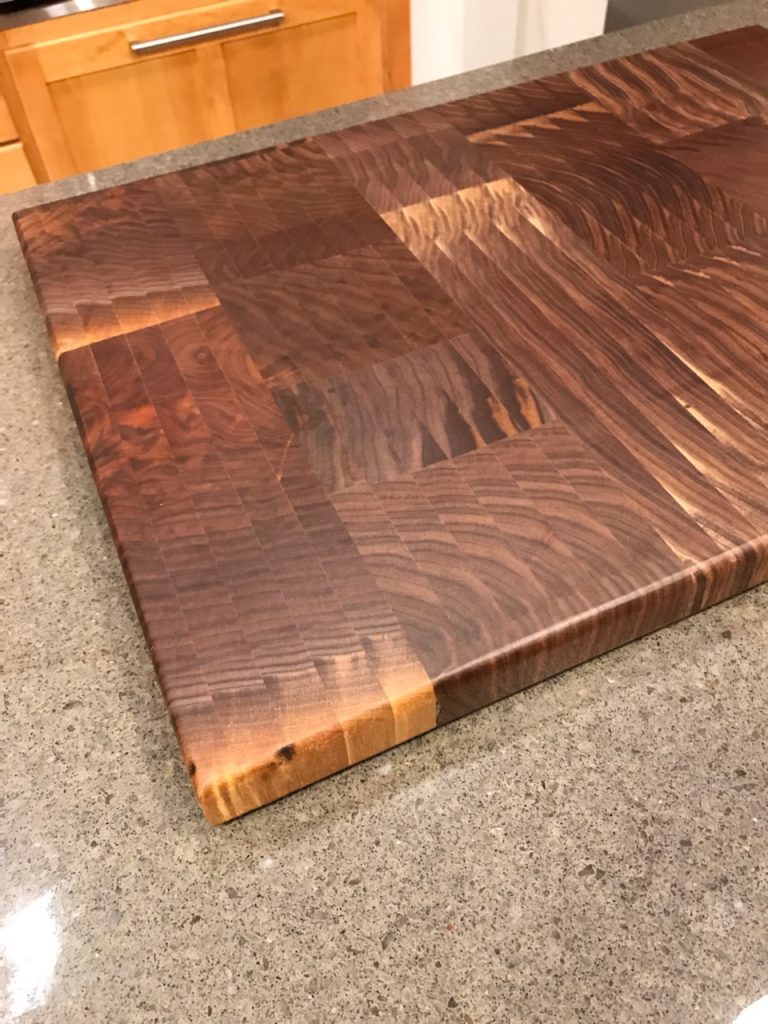
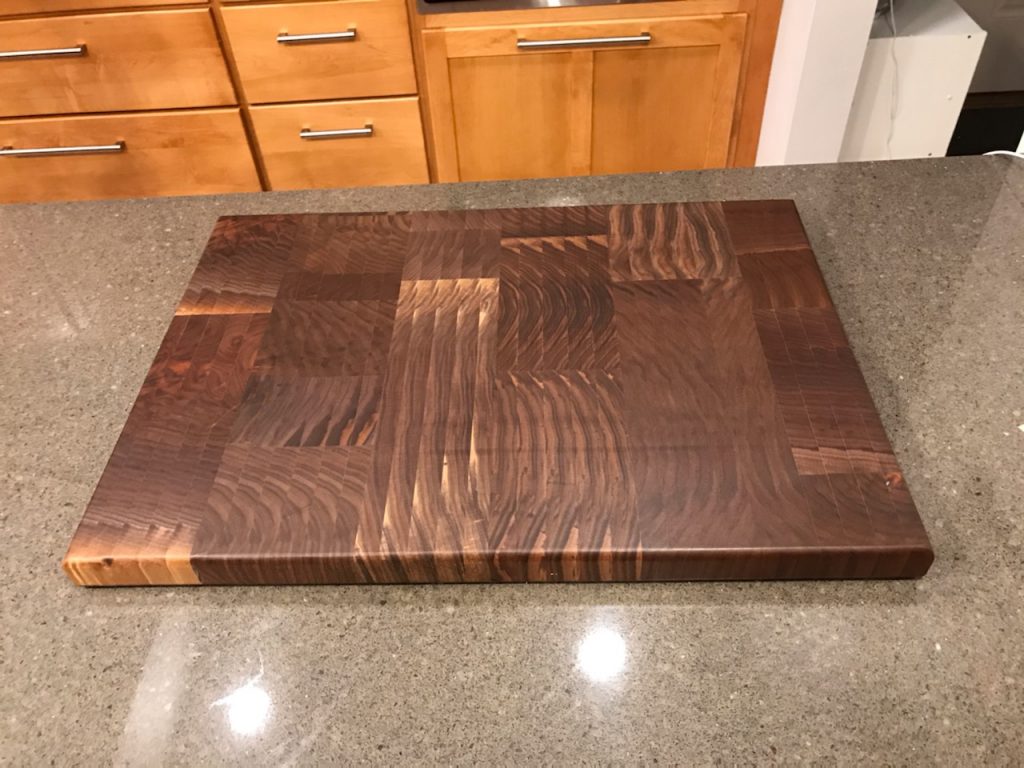
Walnut Cutting Board
The family I built the Rainbow Table, Corner Bench and Breakfast bar for (see Furniture/Tables) asked me to build them a cutting board out of the scraps of walnut that were left over from the projects. This cutting board is 16″ x 24″ and 1 1/2″ thick. They chose to finish it with a beeswax and coconut oil mixture (https://saltinmycoffee.com/handmade-christmas-make-spoon-b…/). Yea it’s kind of big and yea, it’s heavy. I think it came out quite nice. Please let me know what you think and as always, thanks for your support!
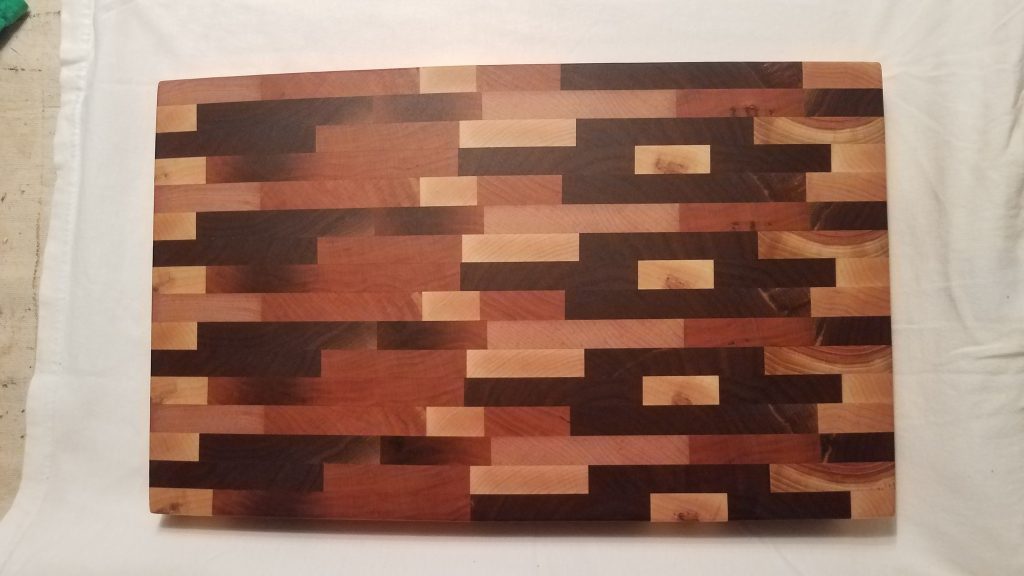
1st Generation Mixed Species
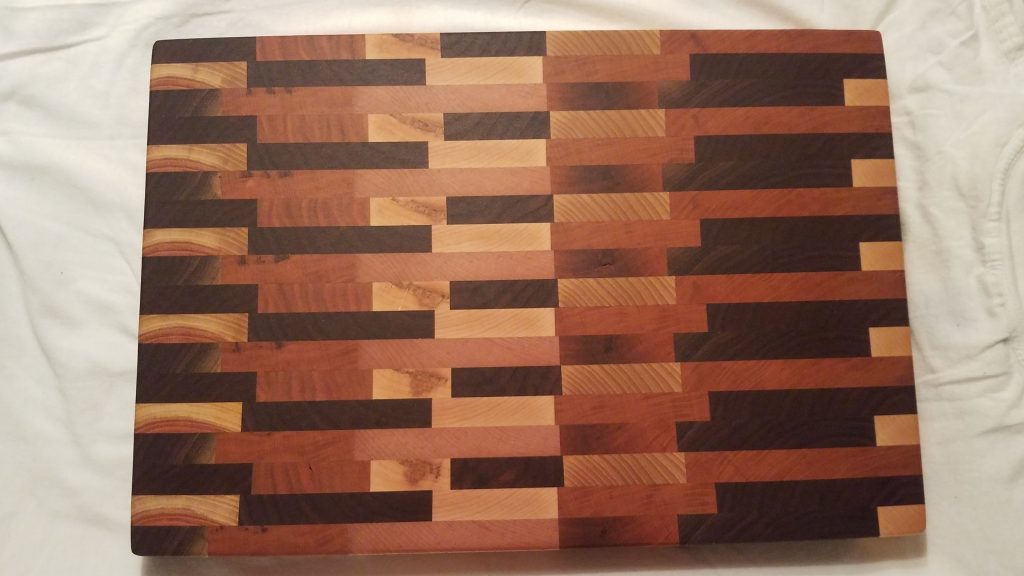
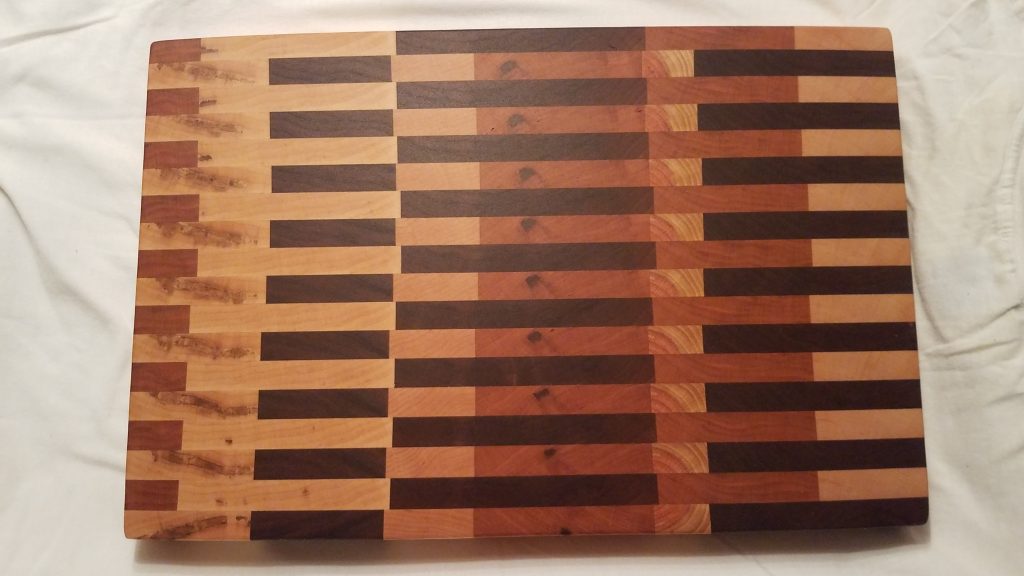
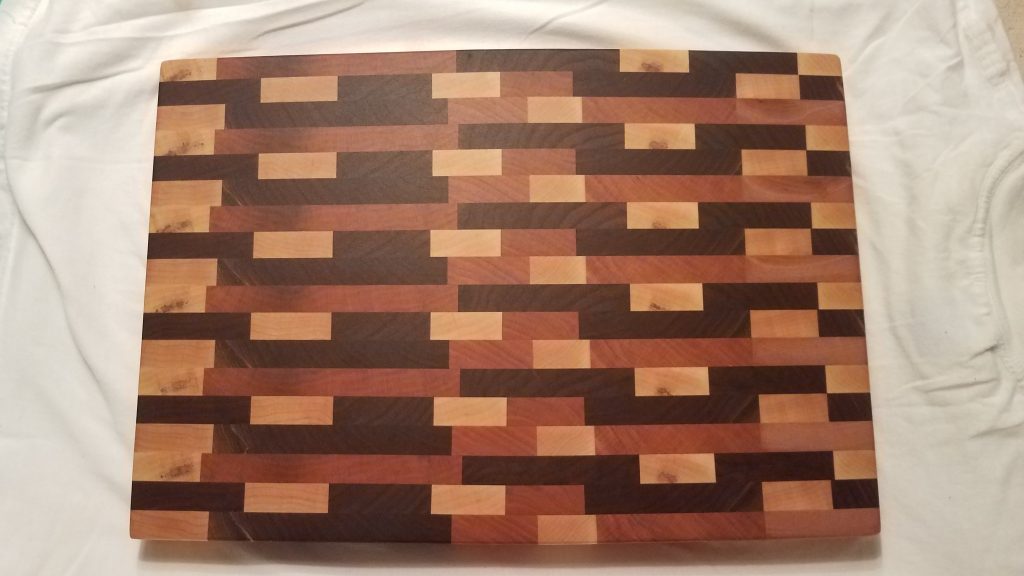
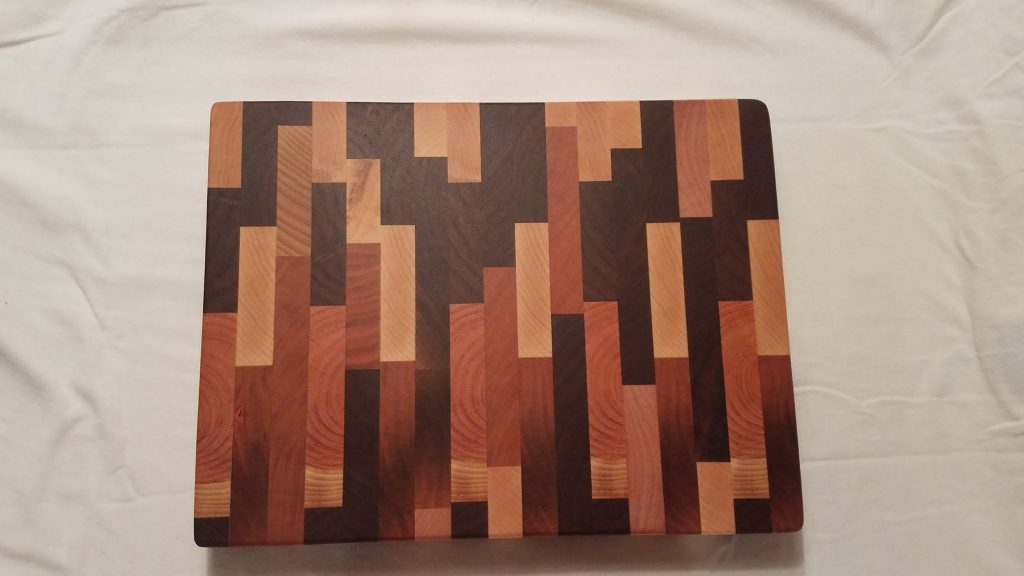
These cutting boards are made of walnut, cherry and maple (there is a little ash in there someplace as well but it looks a lot like the maple). The first 4 of these are roughly 12″ x 18″ and the last on is 9″ x 11 3/4″. The are 1 5/8″ tall.
Other Cutting Boards
Here’s a couple of other cutting boards I’ve made. Cherry, walnut and maple
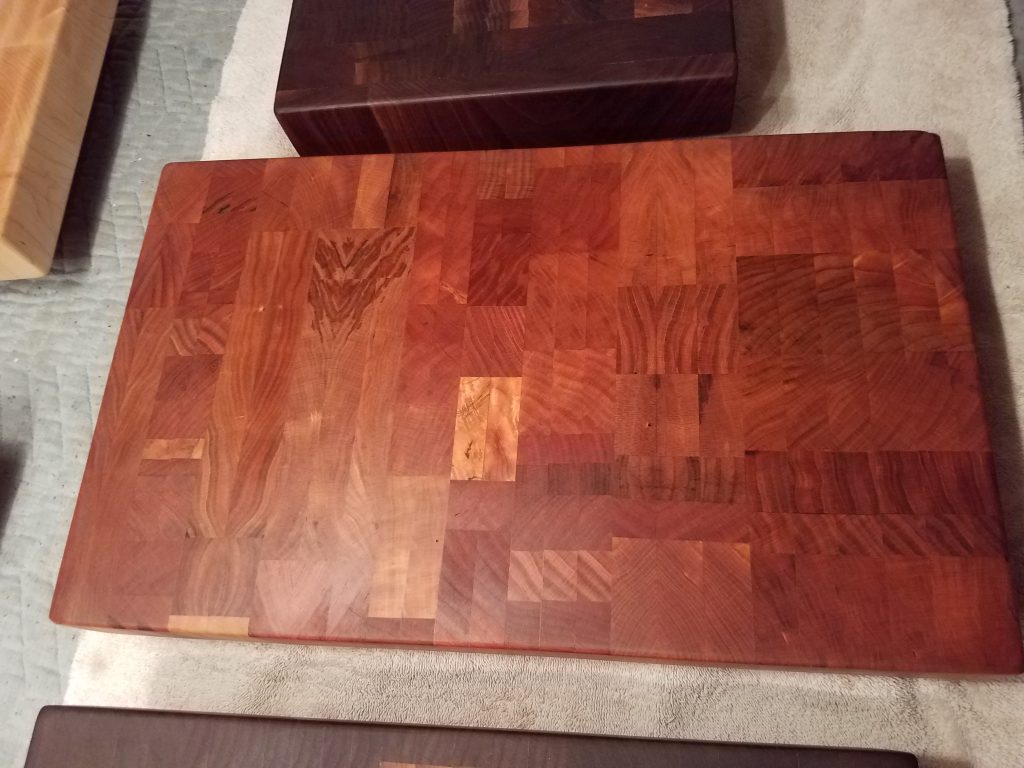
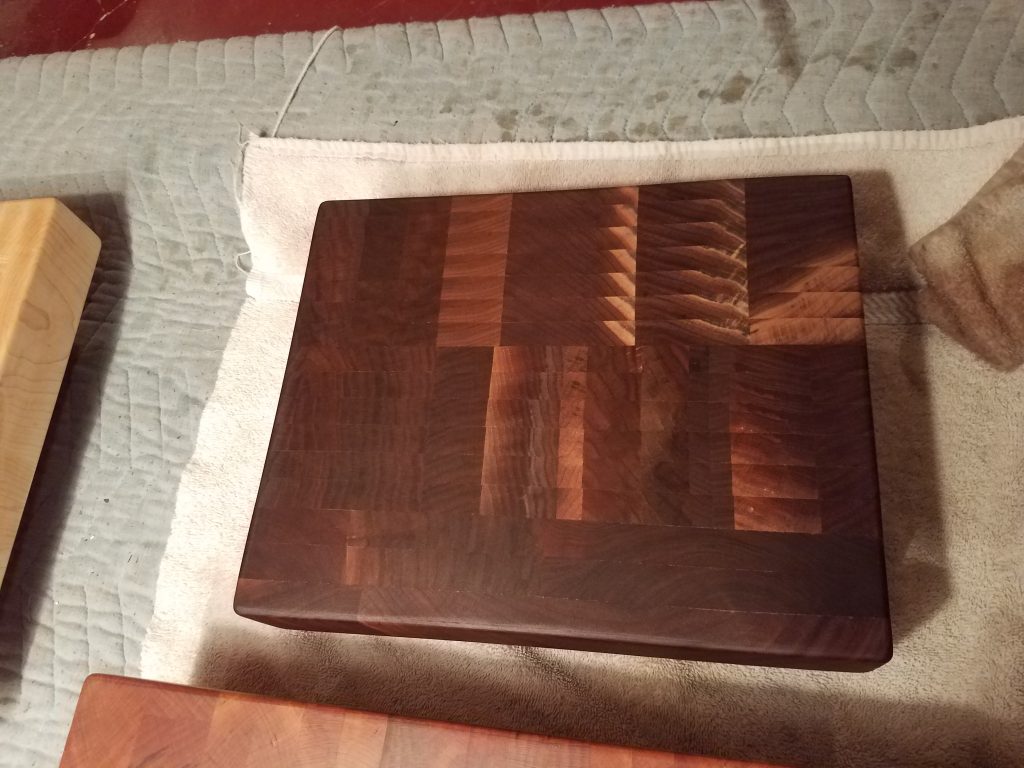
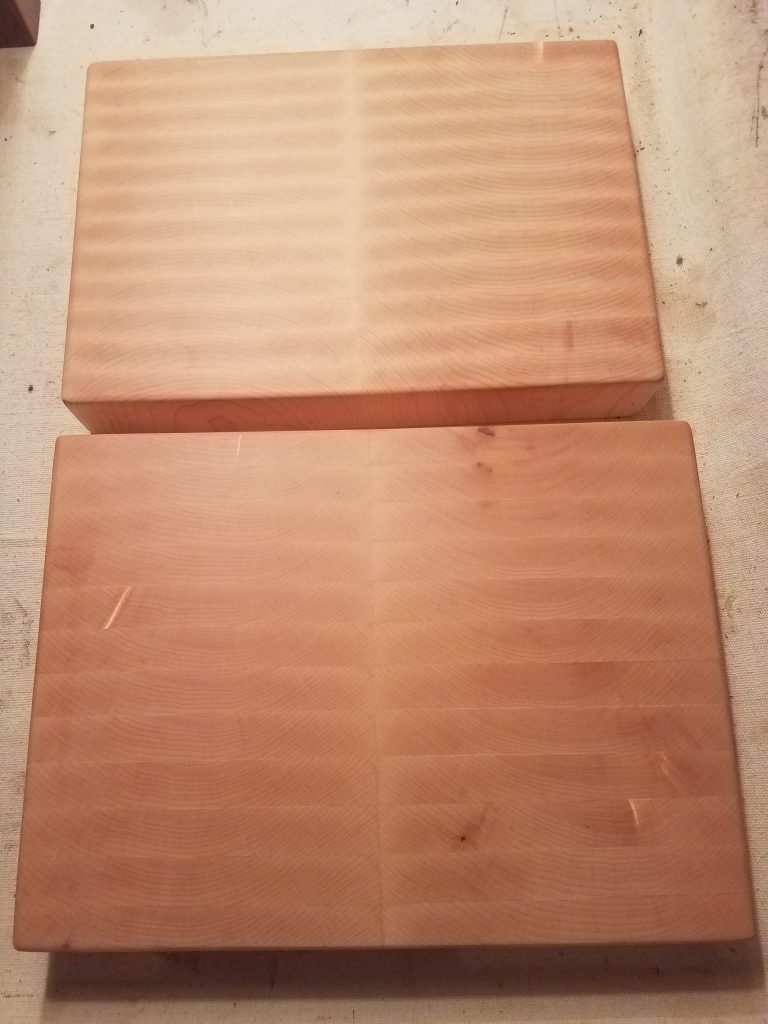
Some cherry, walnut and ash
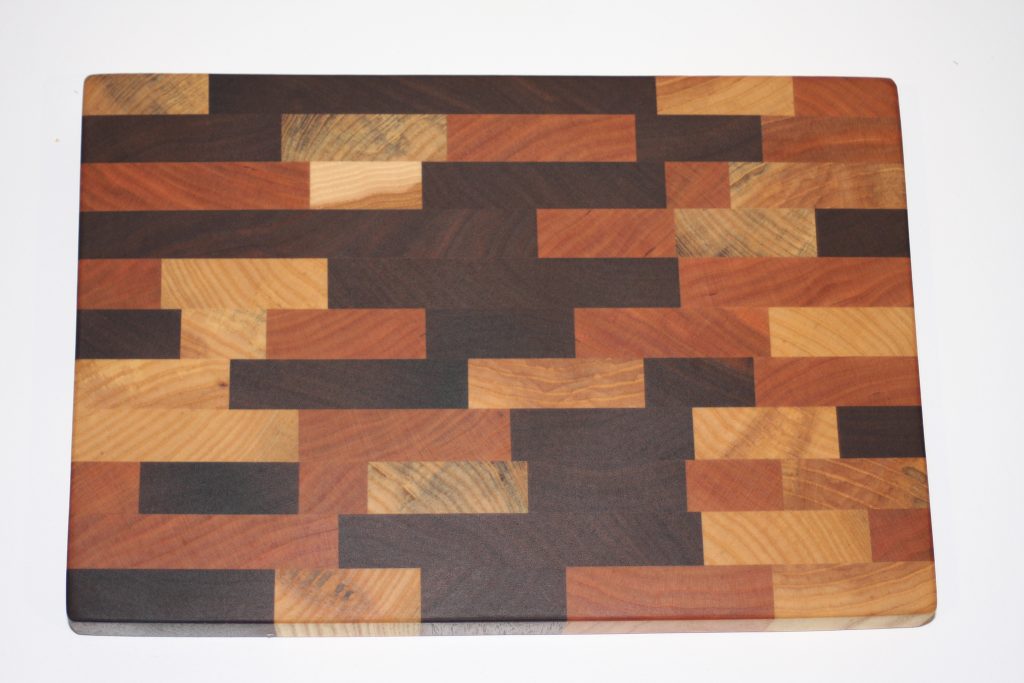
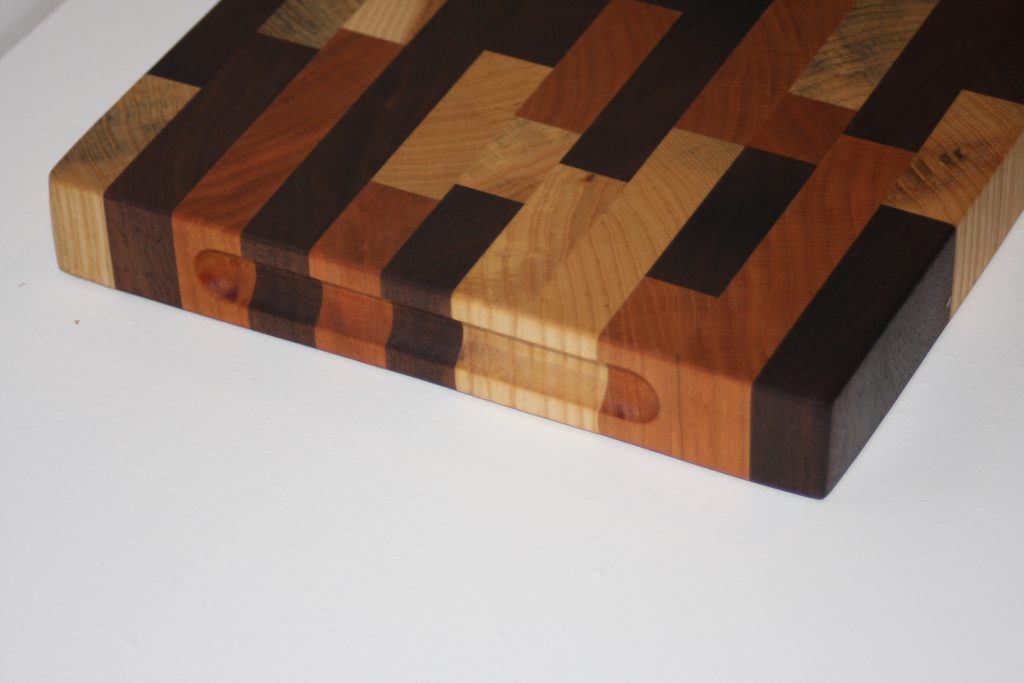
Some coasters made with cherry, walnut and ash
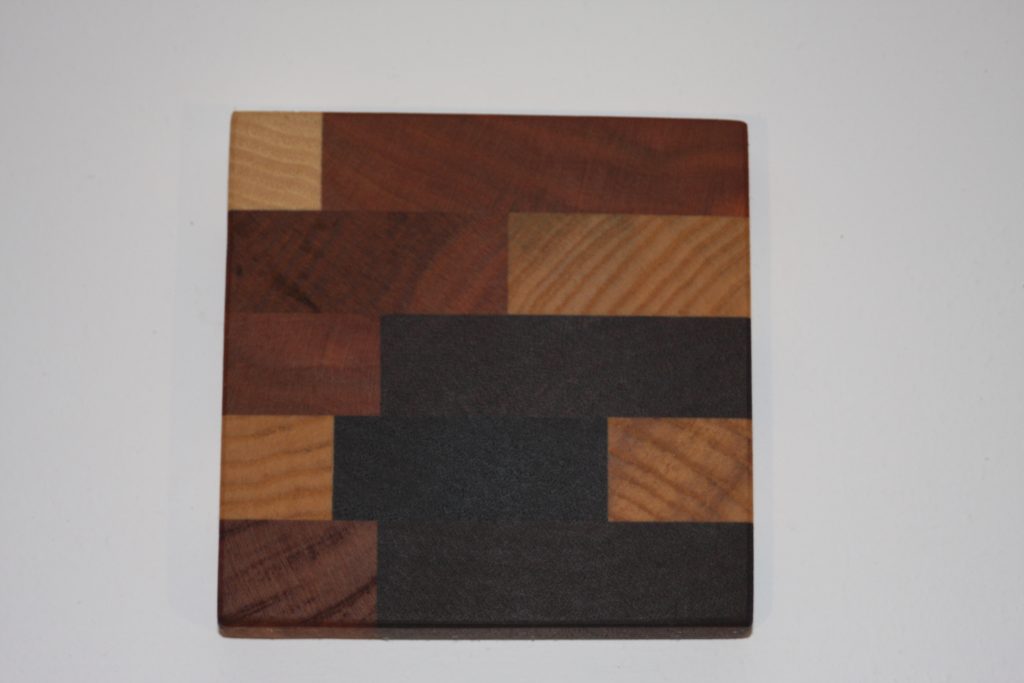
Coasters of maple and walnut
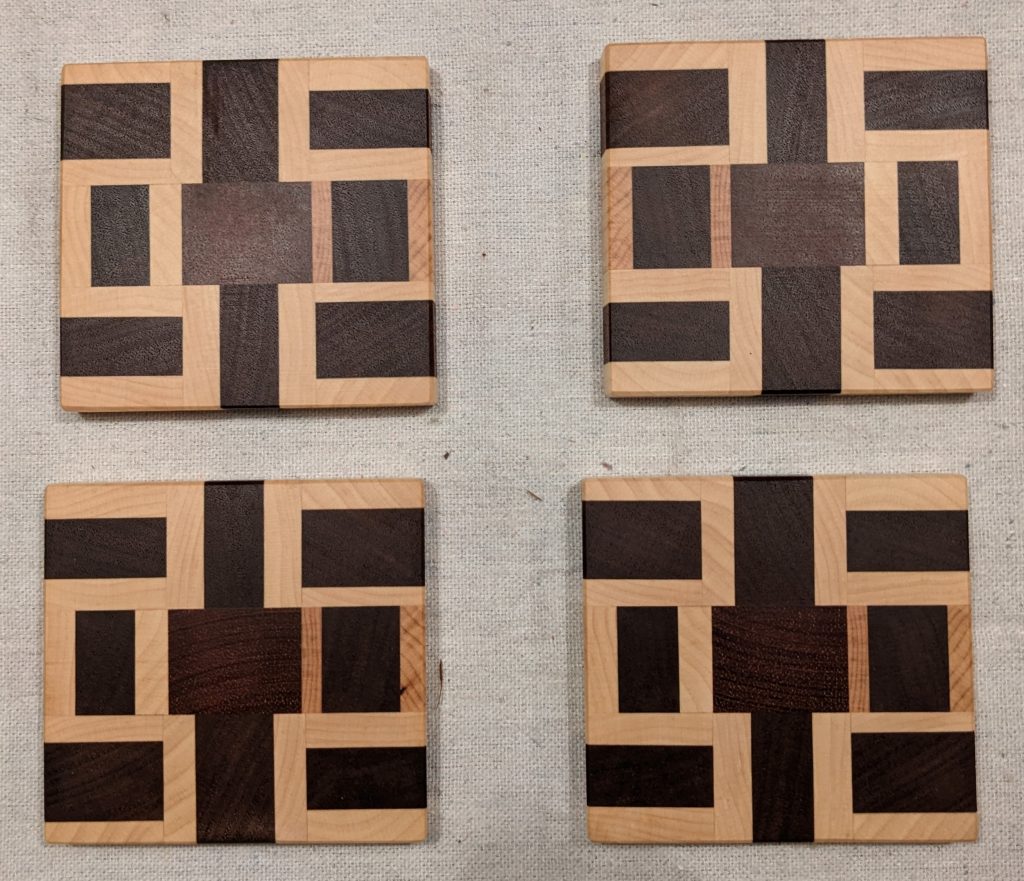
Trivets made with walnut