Why Purple Pig?
When I was 8, my parents moved us from the city of Rochester to Bristol, NY. For those of you not familiar with Bristol, it’s quite rural. How rural? My high school graduating class (Naples, NY) was something like 65 people. I had one friend half a mile south of us and one friend half a mile north – those were the only choices.
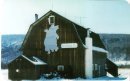
Across the street from our house was an old cow barn that had been turned into a bar and was called the Purple Pig. Ed Nash was the owner. It had a giant dancing purple pig on the front. When I was around 14, I would go over and clean up the place for $1 an hour. Sweep and mop the floors, clean the bathrooms, stuff like that. At 14, I thought this was living! In 1996 the place was sold to Mark Alexander and became The Valley Plowman. Shortly after that (spring of 1977), the building burned down. Rumor had it that it was torched, but I never found out for sure. I’ve only found a couple of pictures of the original Purple Pig.
While I never had a beer in the place (not legally at least), it will always have a place in my heart.
If you know of the old Purple Pig and have stories or photos, please share.
Thanks for supporting the Pig!
Papes
Awards
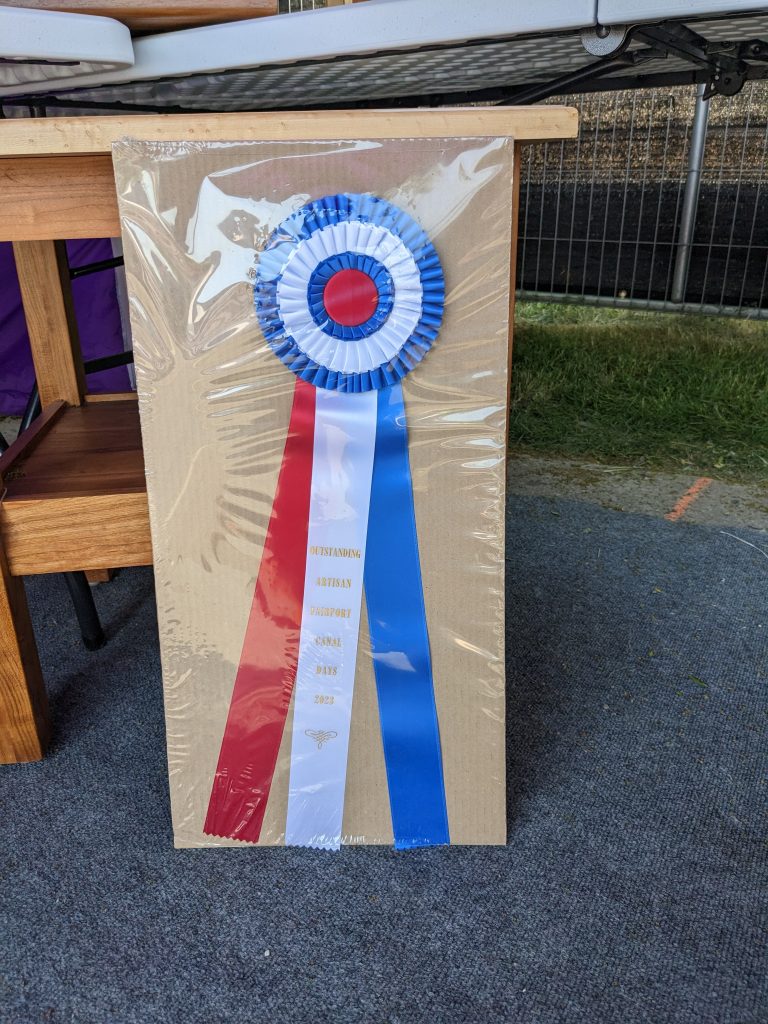
At the 2023 Fairport Canal Days show, I was awarded the “Outstanding Artist of the Year” award. I’m extremely honored to have received this award. Thank you to all of you that have helped me get to this point. Here is a link to the Facebook posting from the organizers of the event:
Best in Show for 2023 is Fairport resident… – Fairport Canal Days | Facebook

Thoughts about your cutting board and its maintenance
What is an end grain cutting board?
End grain cutting boards are made of pieces of hardwood (maple, ash, walnut, cherry etc.) joined together using an FDA approved food safe waterproof glue. When looking at the surface of an end grain cutting board, you’re looking at the rings of the tree.
While wood can withstand some amounts of water (and other liquids) it’s not truly waterproof and if it becomes saturated with water it can warp and split. For this reason, you should NEVER put your cutting board in a dishwasher or submerge it in water. If you do, it will warp, bow, crack or all 3.
Benefits:
There are several benefits of an end grain cutting board:
- Your knife edge slides between the fibers and stays sharp for much longer
- The tight arrangement of wood fibers lends itself to a natural self-repair
- More resistant to warping and cracking
Cleaning:
Never put your cutting board in the dishwasher. NEVER!
Every time after you use your cutting board, you need to clean it as soon as possible. This helps mitigate any stains and odors that might become attached to the surface. A sponge with an anti-scratch scrubbing surface, a sturdy dishcloth, or a nylon bristled dish brush are good tools for removing food particles from the cutting boards surface.
Once you’ve removed the visible food particles, quickly and gently wet the surface with warm to hot water and place a little dish soap on it. With a sponge, dishcloth, or dish brush scrub in a circular motion, paying close attention to move all around the board (edges and bottom, too). This will remove all non-visible food particles and any microbes that might be hiding on the surface. The longer you work up the suds the more the soap can lift any dirt and food particles left on the surface.
After you’ve cleaned your board, rinse it off thoroughly and dry it immediately using a lint-free towel. Paper towels can work in a pinch, but they will leave behind some fuzz, which is harmless, but not pretty.
Drying:
Cutting boards made by the Purple Pig Wood Shop do not have feet. This is intentional. That way you can use both sides, you’re essentially getting 2 cutting boards in one. However, this also means that you MUST put your cutting board on its side in a dishrack after cleaning it. When cleaning your board, it typically doesn’t take too long to dry, an hour should be fine. However, when oiling your cutting board, it could take a while (see “Maintenance” below). Bottom line is that you don’t want your wet cutting board sitting flat on the counter trapping in moisture.
Maintenance:
If your cutting board is feeling dry or maybe it looks like it could use a little freshening up, it may be time to apply some mineral oil to the board. Some people recommend doing this every few weeks. I think they are just trying to sell you more mineral oil. In our house where the cutting board gets used every day, we oil it about every 6 months.
To apply the mineral oil, use a paper towel to spread a generous amount over the entire surface. Be sure to get into the juice groove (if applicable) and all the sides. How much do you use? Well, if the cutting board absorbs all that you’ve applied really quickly (like in a minute or two) then you didn’t use enough. If there is still some oil sitting on top after 20 minutes, you used to much. You’ll get the idea after you done this once or twice. Let the cutting board dry for a few hours or better yet, overnight. For the drying process, I use those painters’ pointer things. You could also put it into your dish rack. After it dries, wipe it off with a dish towel just to get anything that’s left over and you’re good to go.
What kind of oil?
Food grade mineral oil. Do not use any type of cooking oil such as olive oil, canola oil etc. These types of oil can (will) go bad when exposed to air, which could leave your board with an unpleasant order and could transfer that oder and flavors to your food.
You can get mineral oil in a variety of places, Amazon had lots of options as well as Lowes and Home Depot. Just make sure it’s “food safe”.
Heat:
You’ve purchased a cutting board. It’s not a trivet aka, hot plate. While you could use it as such, this will tend to dry out the cutting board (see “Dry Environment” below) and ruin the finish.
Types of knives:
Serrated knives will scar your board. Cleavers can also damage it. You have a cutting board, not a chopping block.
Dry environment:
If you live in an area that is dry a lot of the time, like the desert or at a high altitude, you should consider oiling your cutting board more frequently. These environments are prone to dry out wood more quickly than other environments. This includes your cutting board. When your board seems like it’s drying out, oil it.
Storage:
In our house, our cutting board gets used EVERY day, so it lives on the counter. However, if you need to store it, place it on its edge, typically along with things like your cookie sheets.